
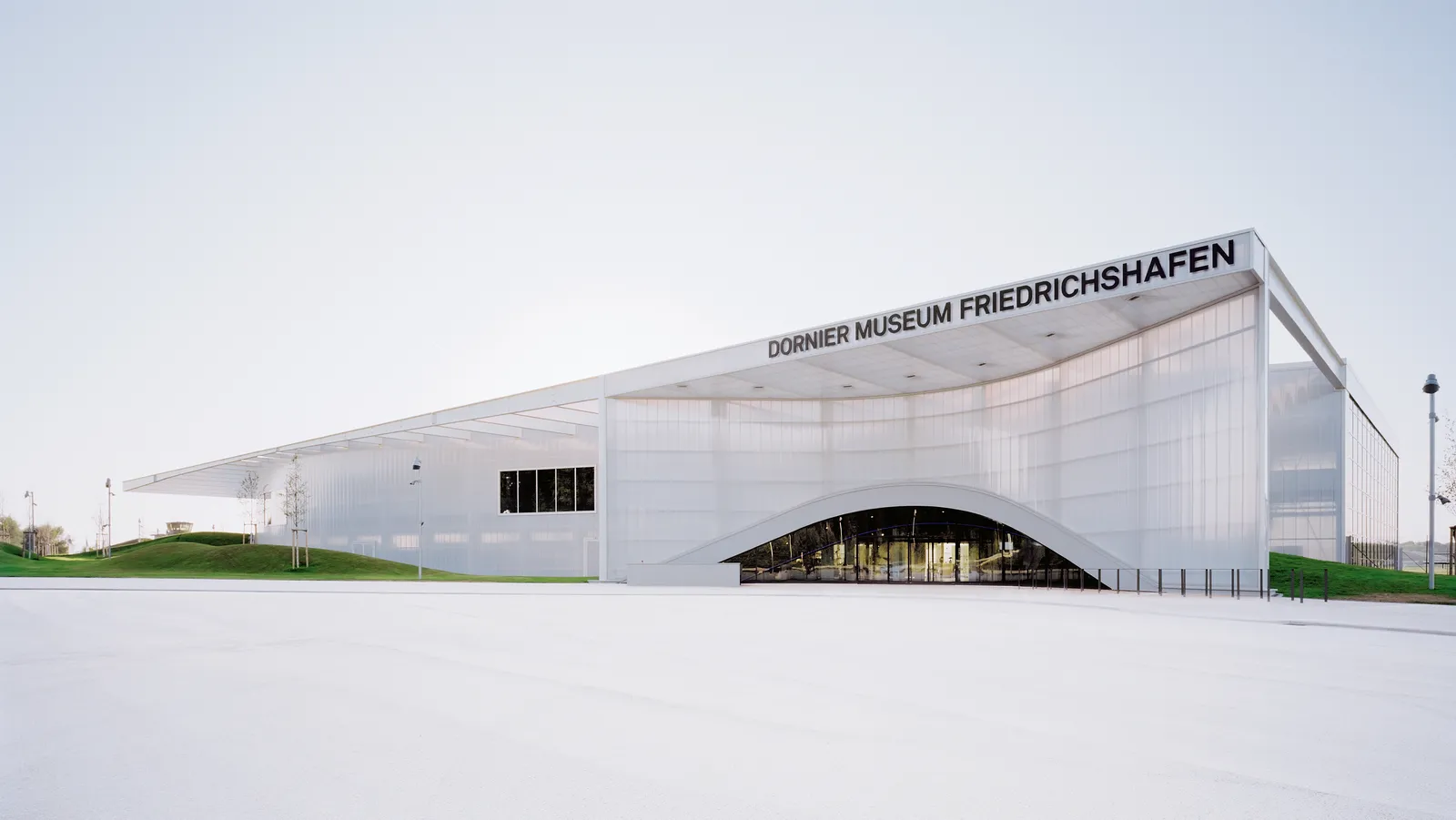

Dornier’s Aviation and Aerospace Museum poses a striking typological confrontation with its unique location at the Friedrichshafen Airport; in it, the history of aviation meets modern-day air traffic head on. The architectural concept incorporates all of the museum’s exhibits under one roof, while simultaneously creating, as a whole, a theatrical backdrop.
The museum building is built directly above an arched taxiway that extends from the airfield like an off-ramp. This positions the museum as a logical extension of the airport and a direct link to the runway.
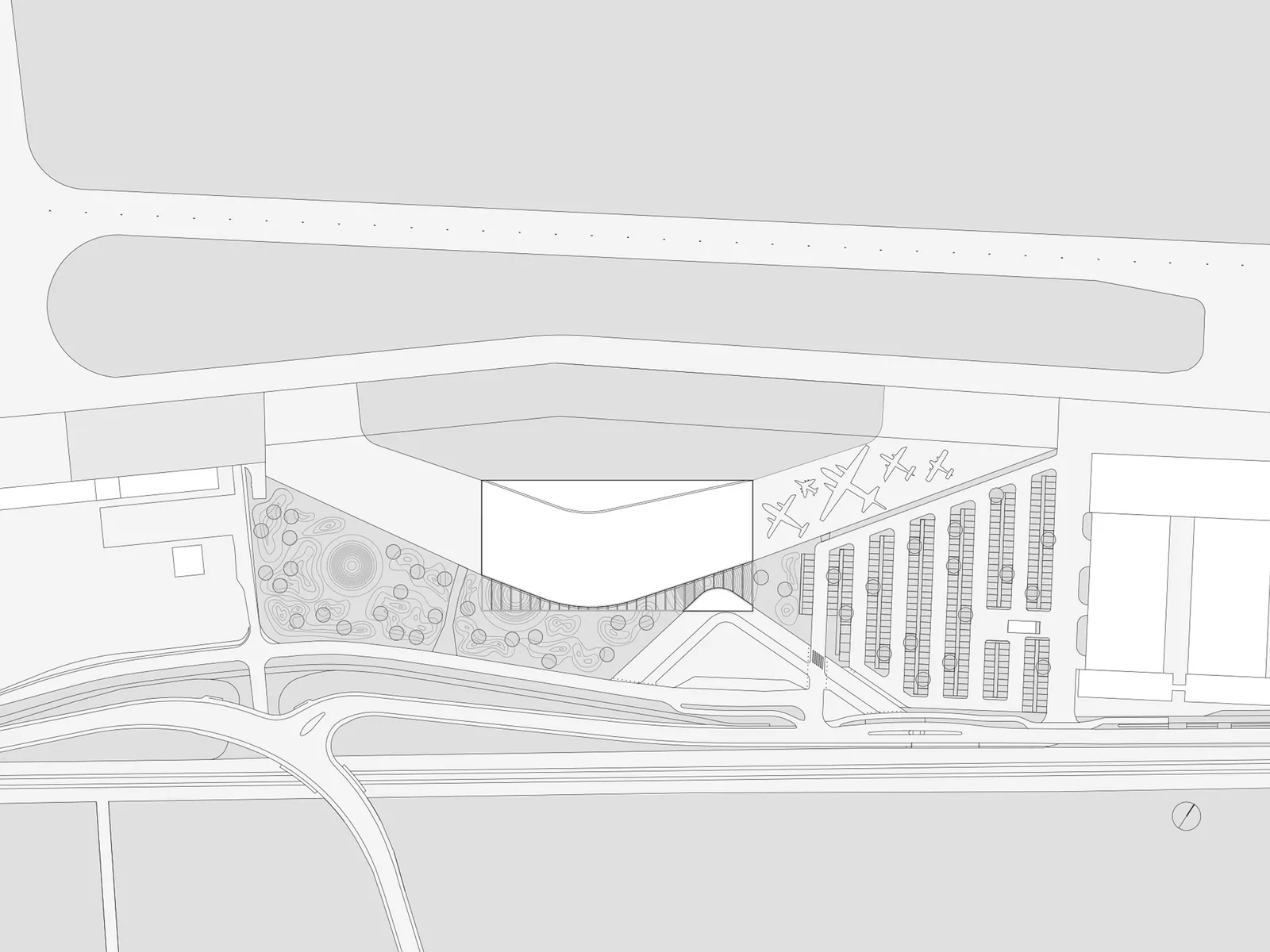
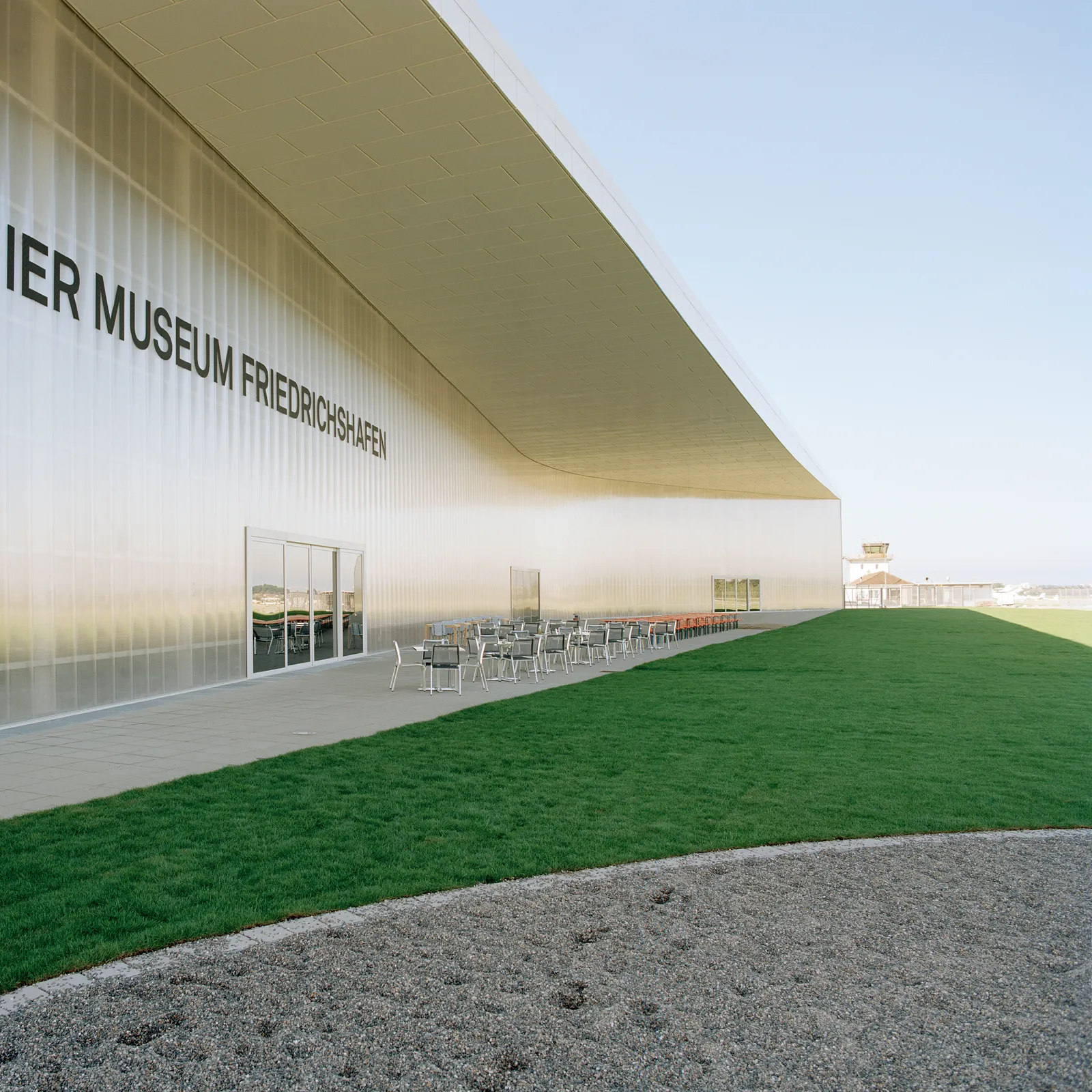
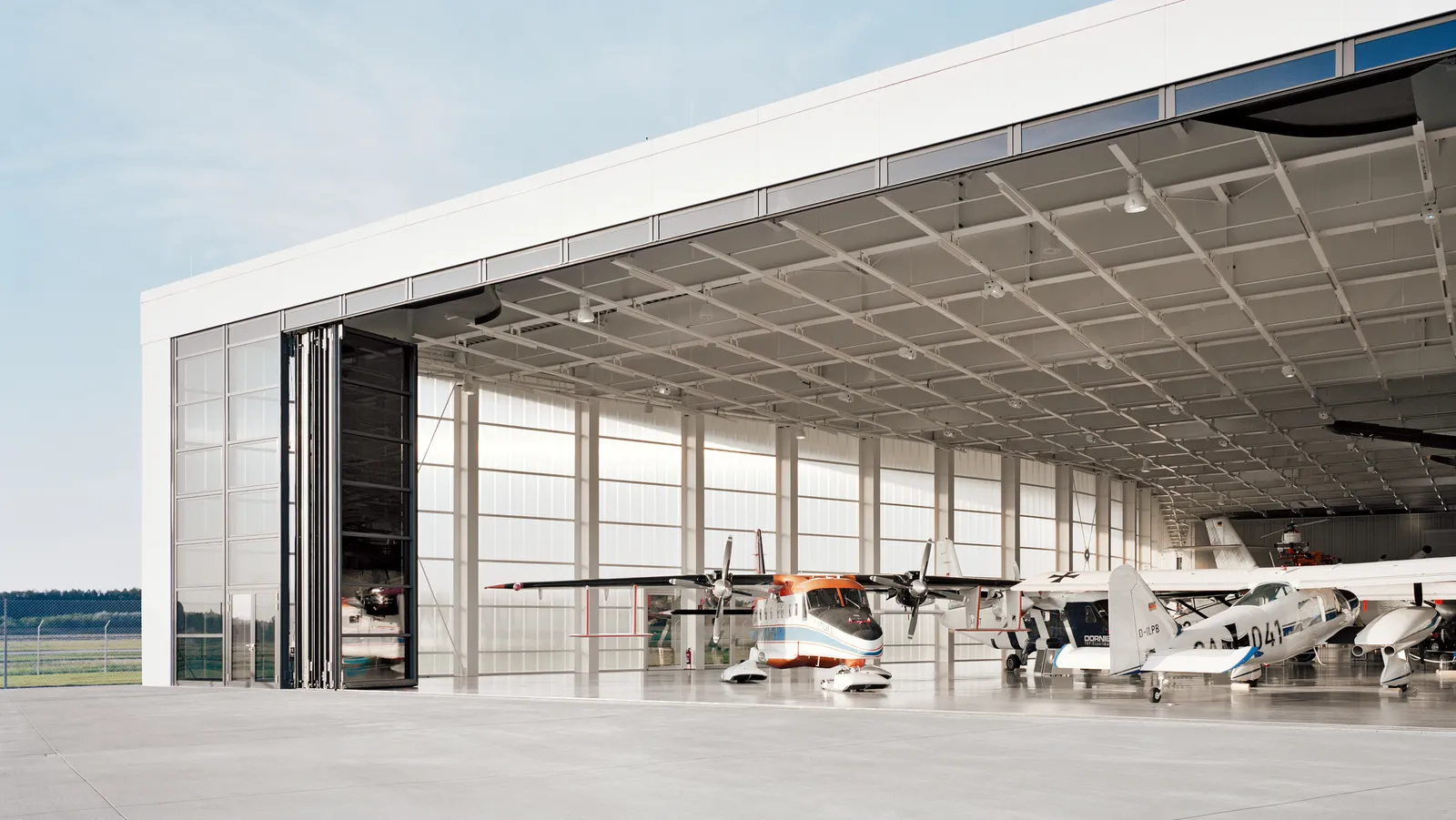
The idea of the taxiway continues in the interior, defining the spatial configuration – exterior penetrates interior, implied function defines form – visitors become receptors, using both the surroundings and the exhibit to contemplate and question their perceptions of the past and the present.
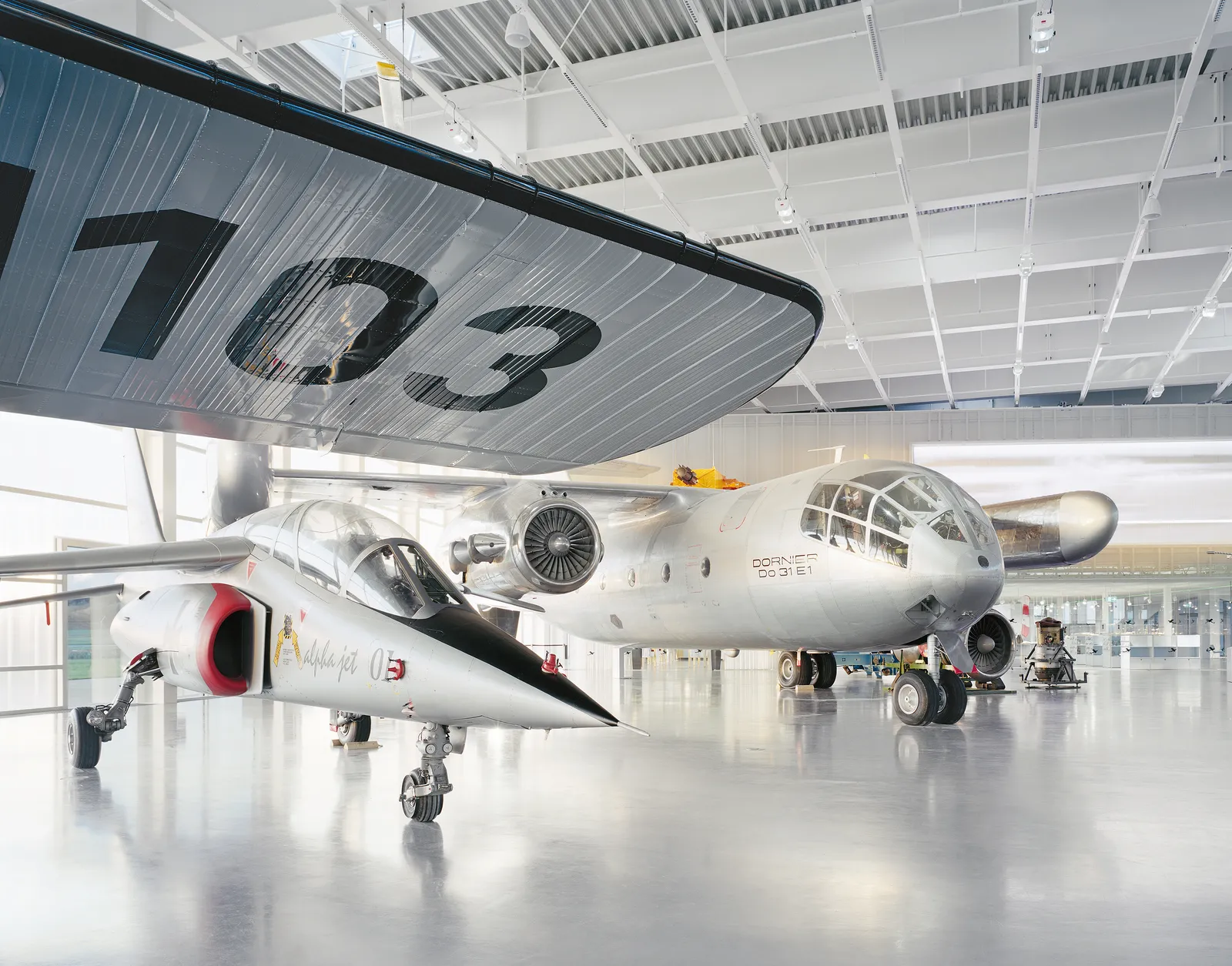
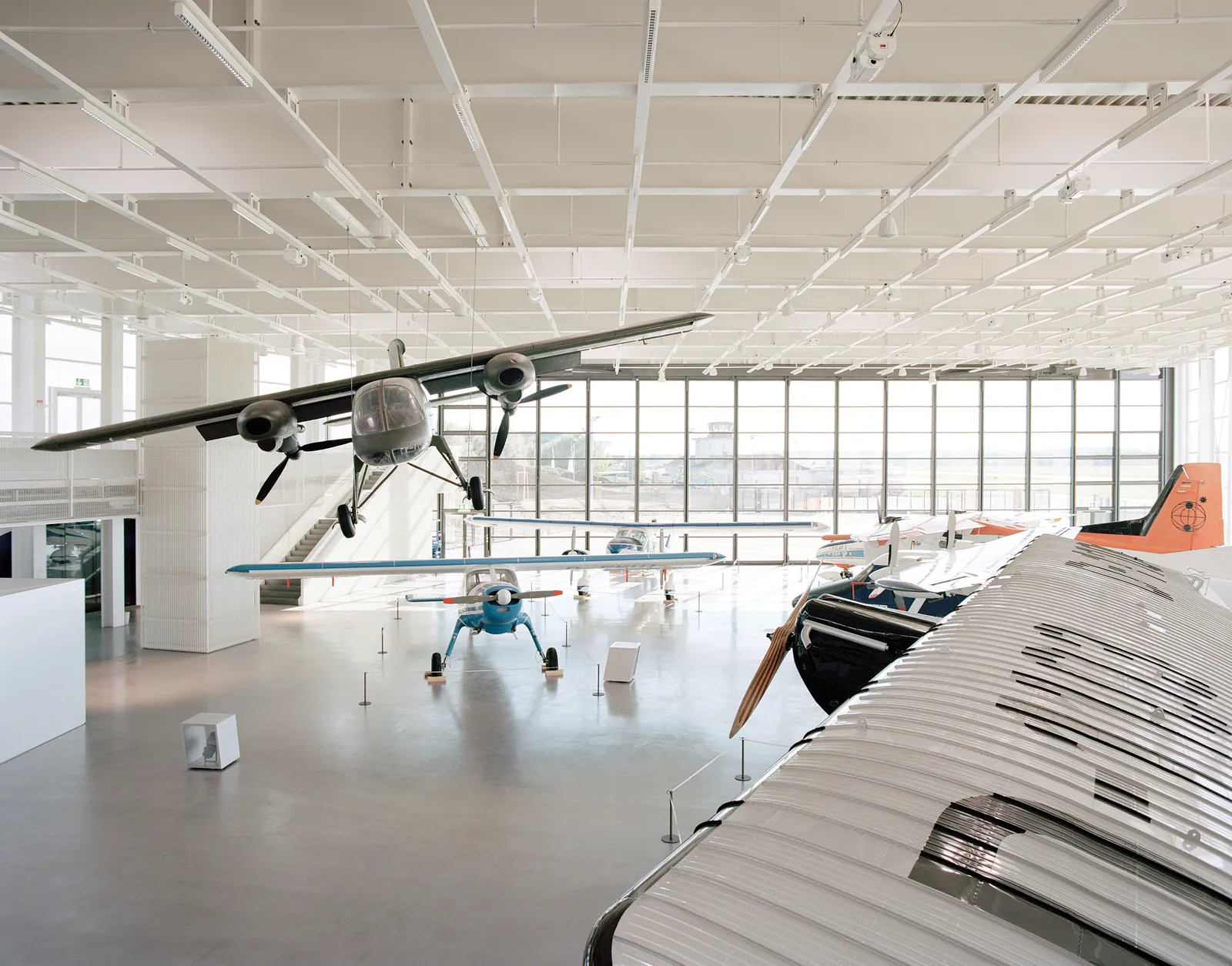
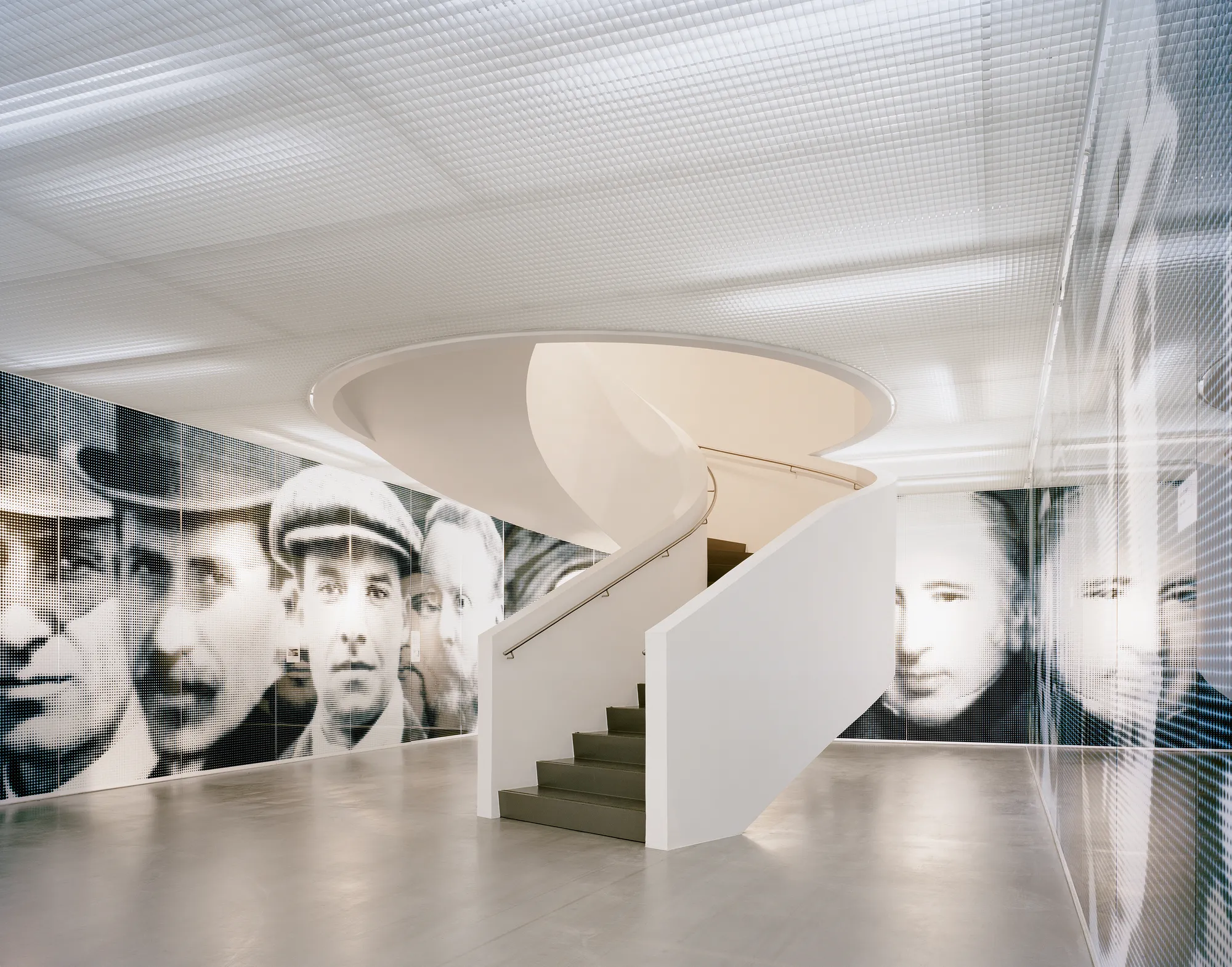
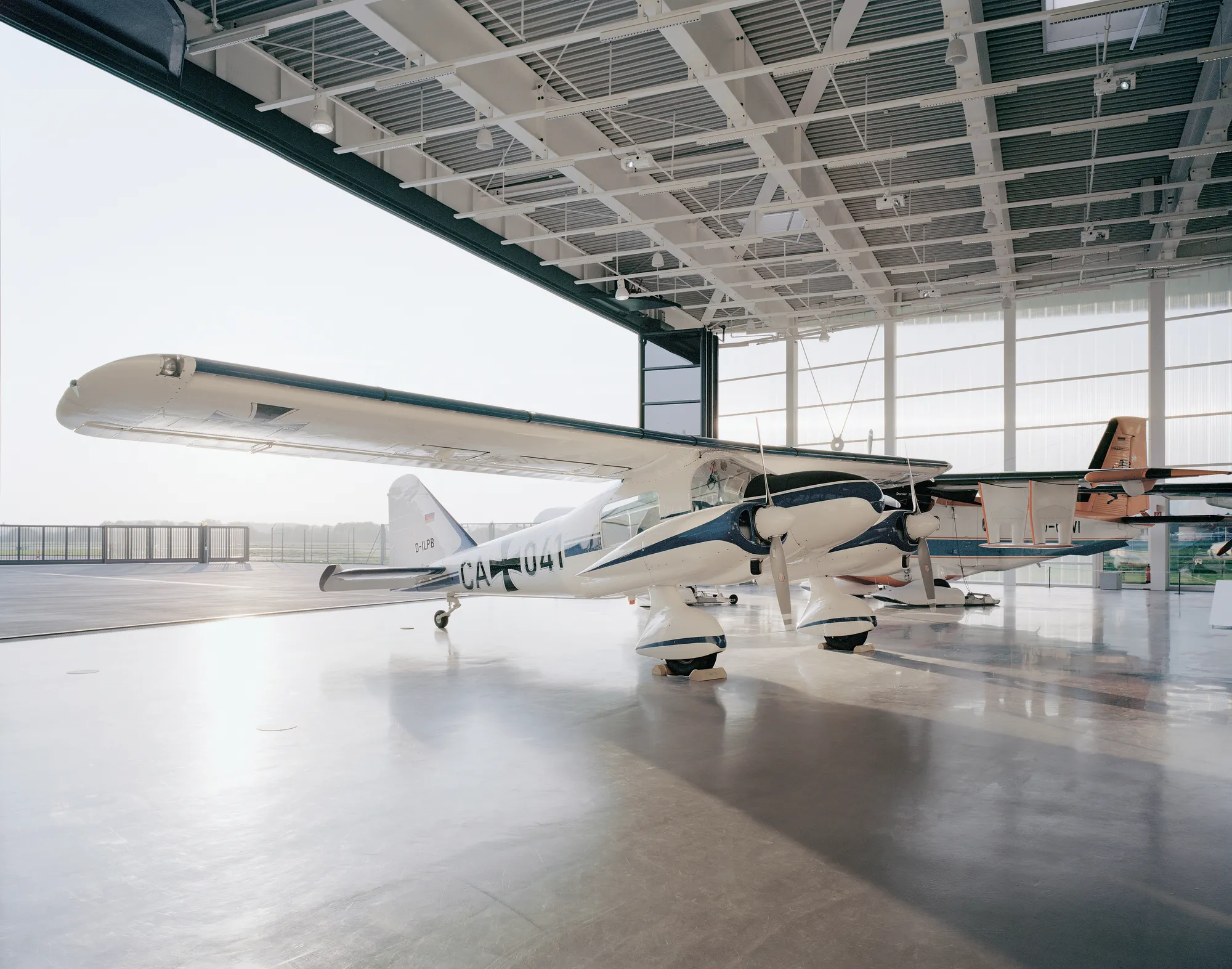
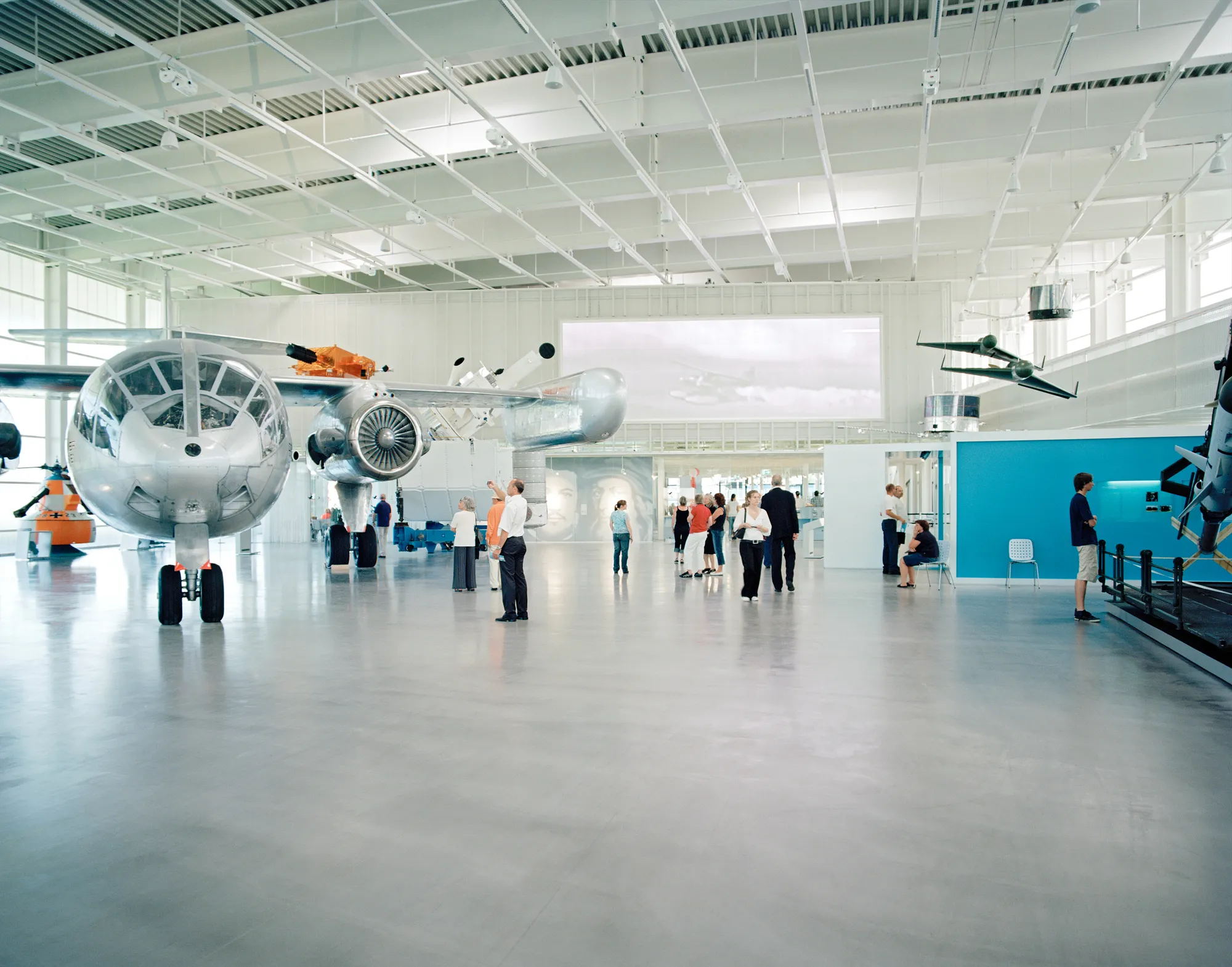
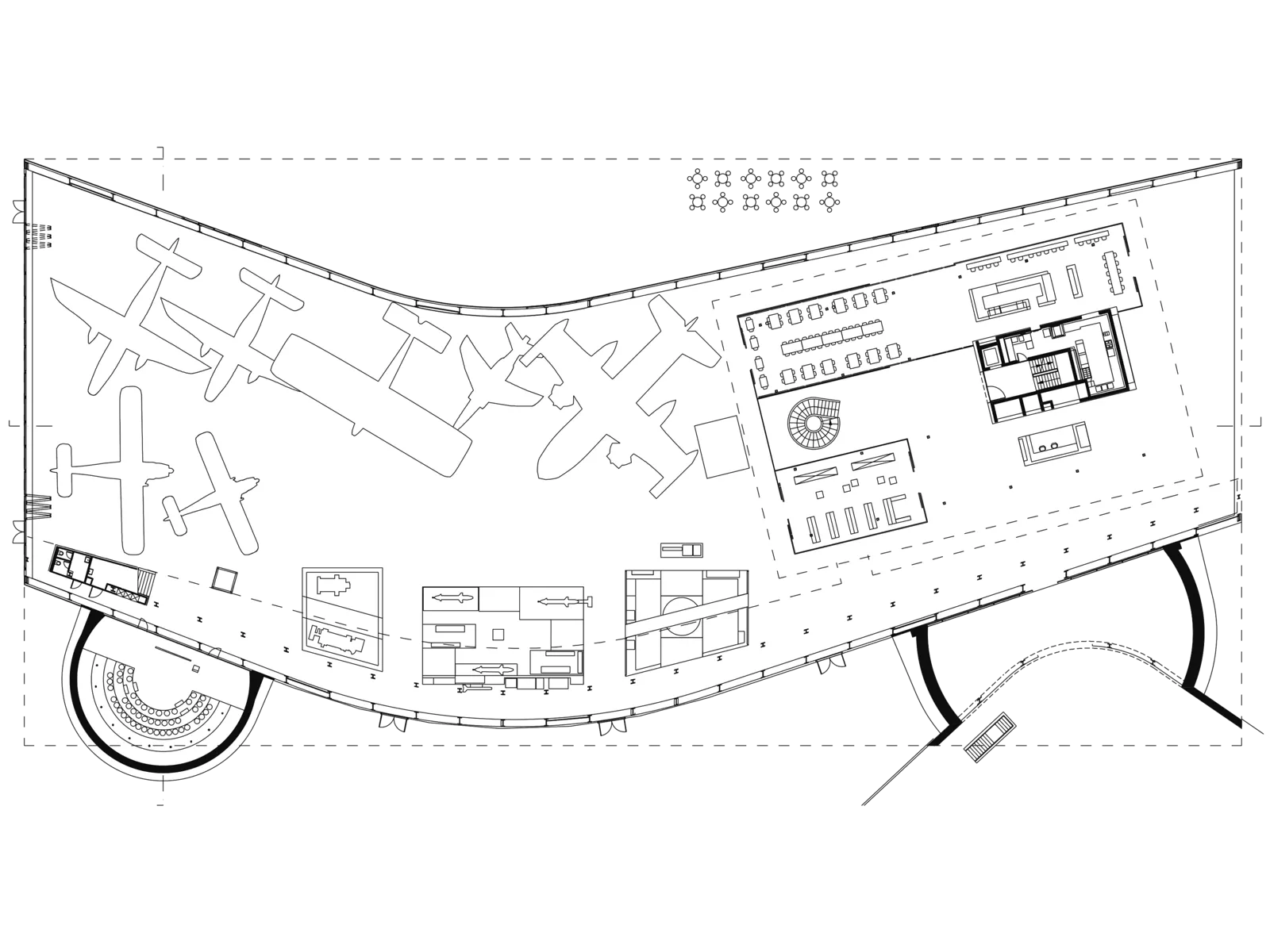
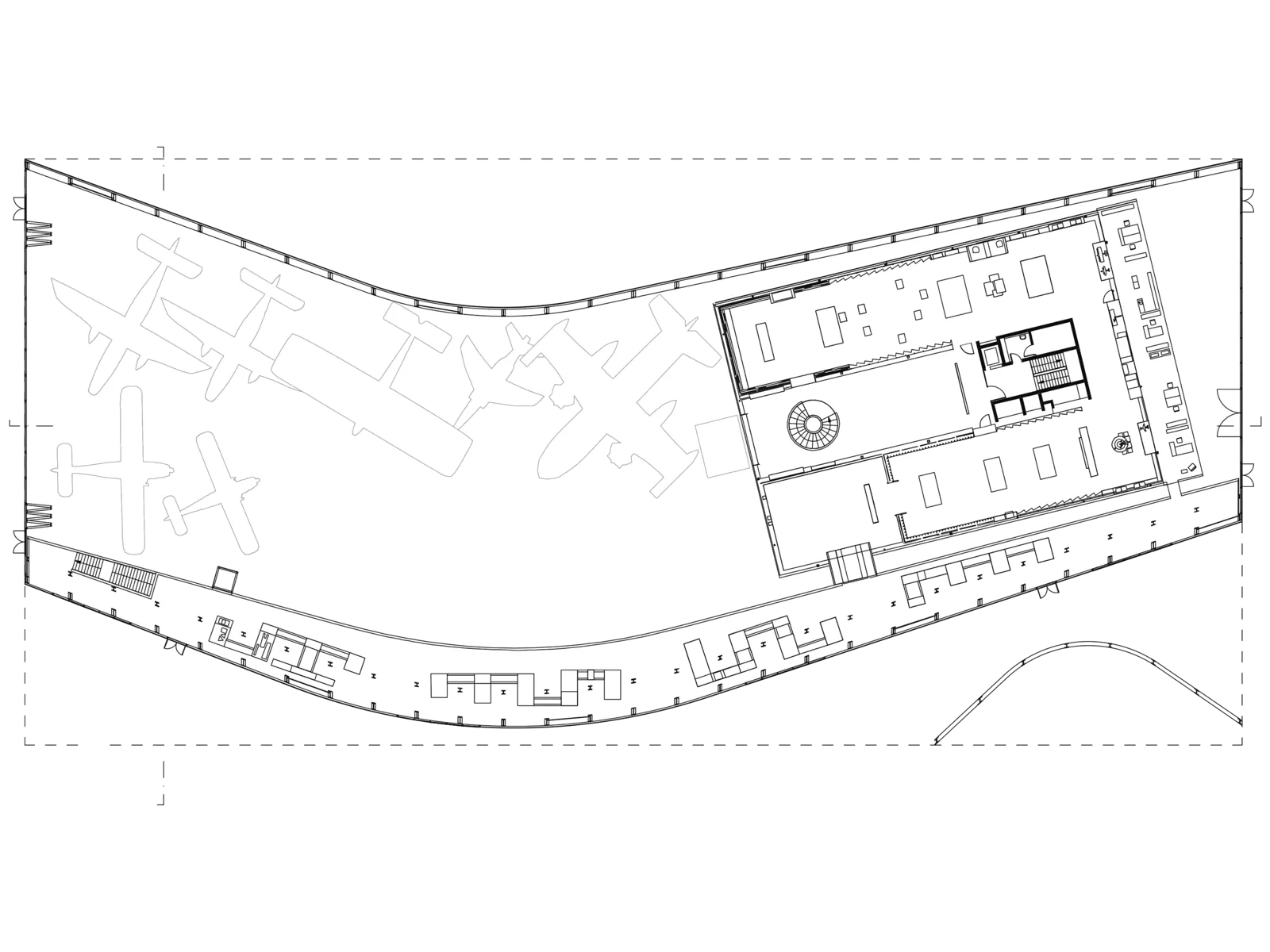
This contextual, architectural maneuver is sustained throughout the entire complex, which suggests in its industrial expression a hangar retrofitted for use as a museum.
The building integrates exhibit areas with hangar space for actual aircraft. Transparent gates isolate the building from the airport, while also allowing visitors to engage with the air traffic as it comes and goes.
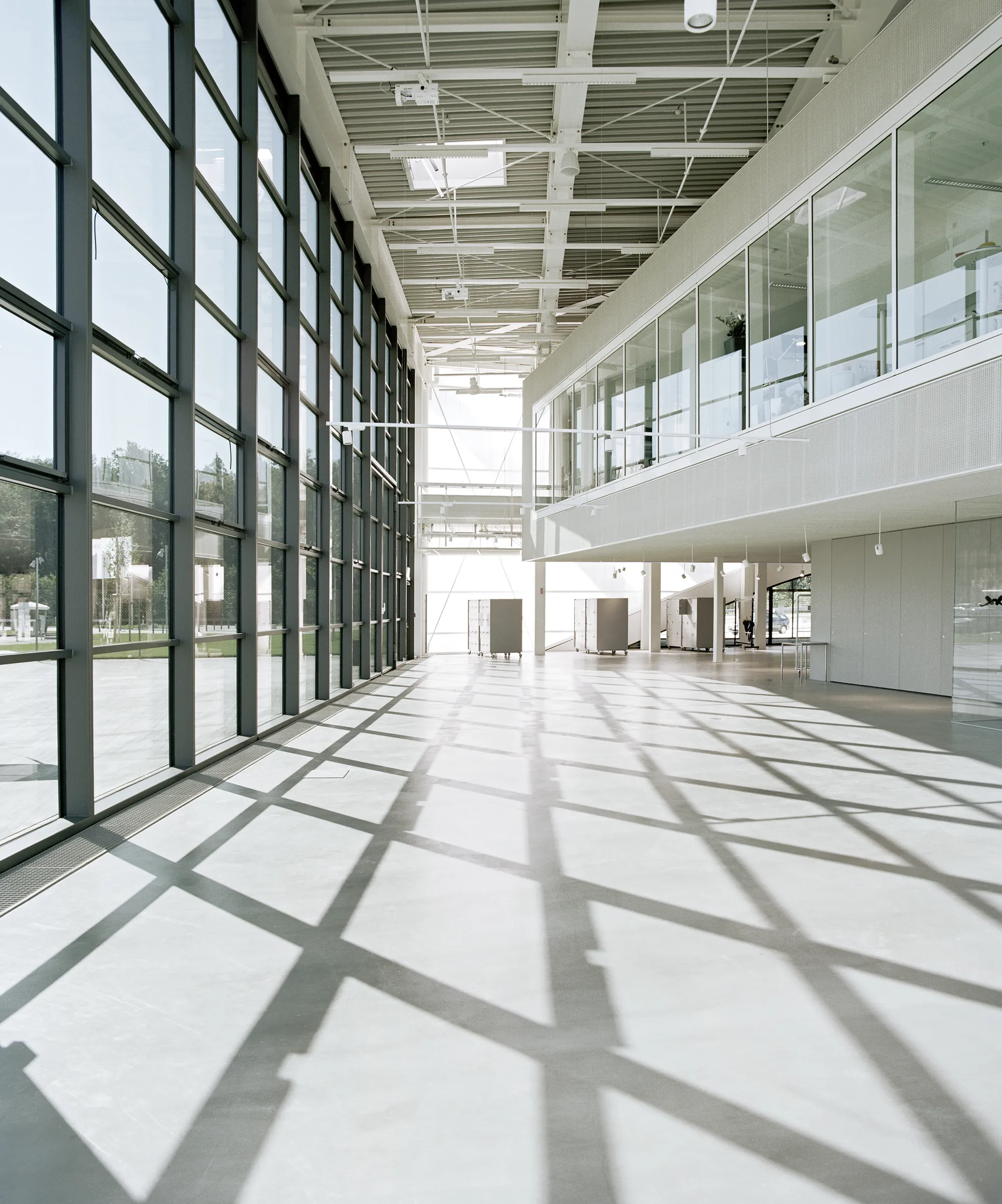
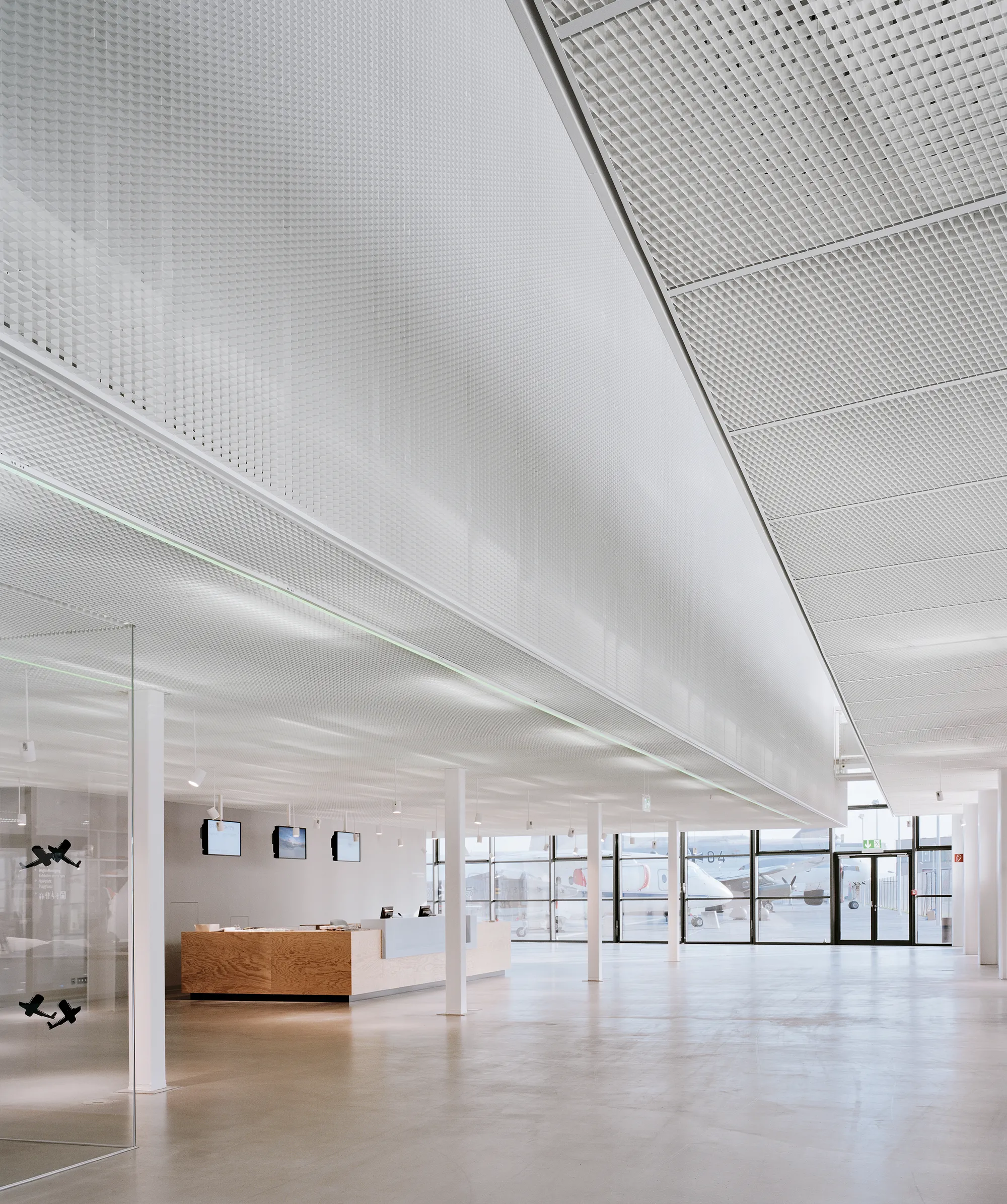
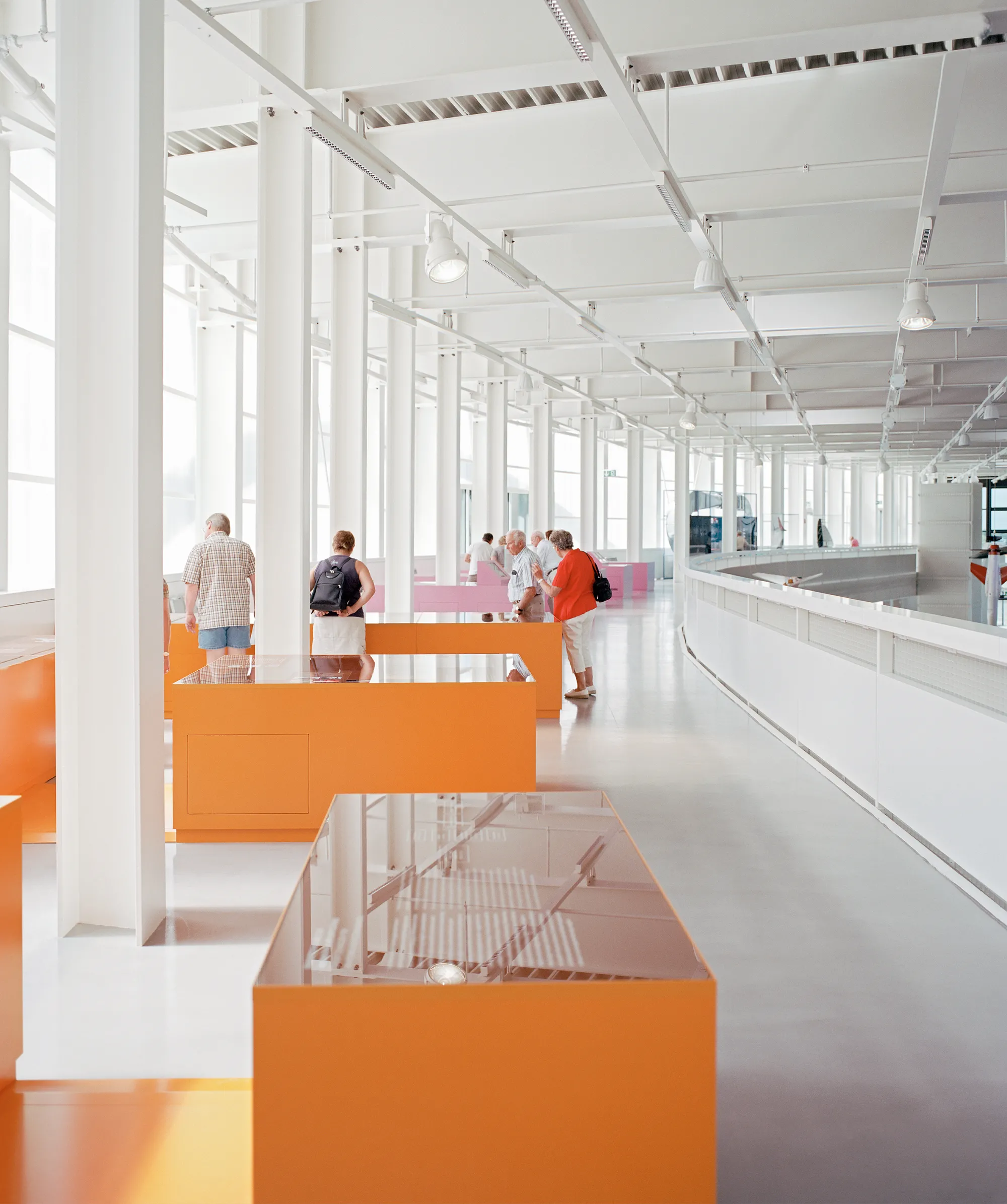
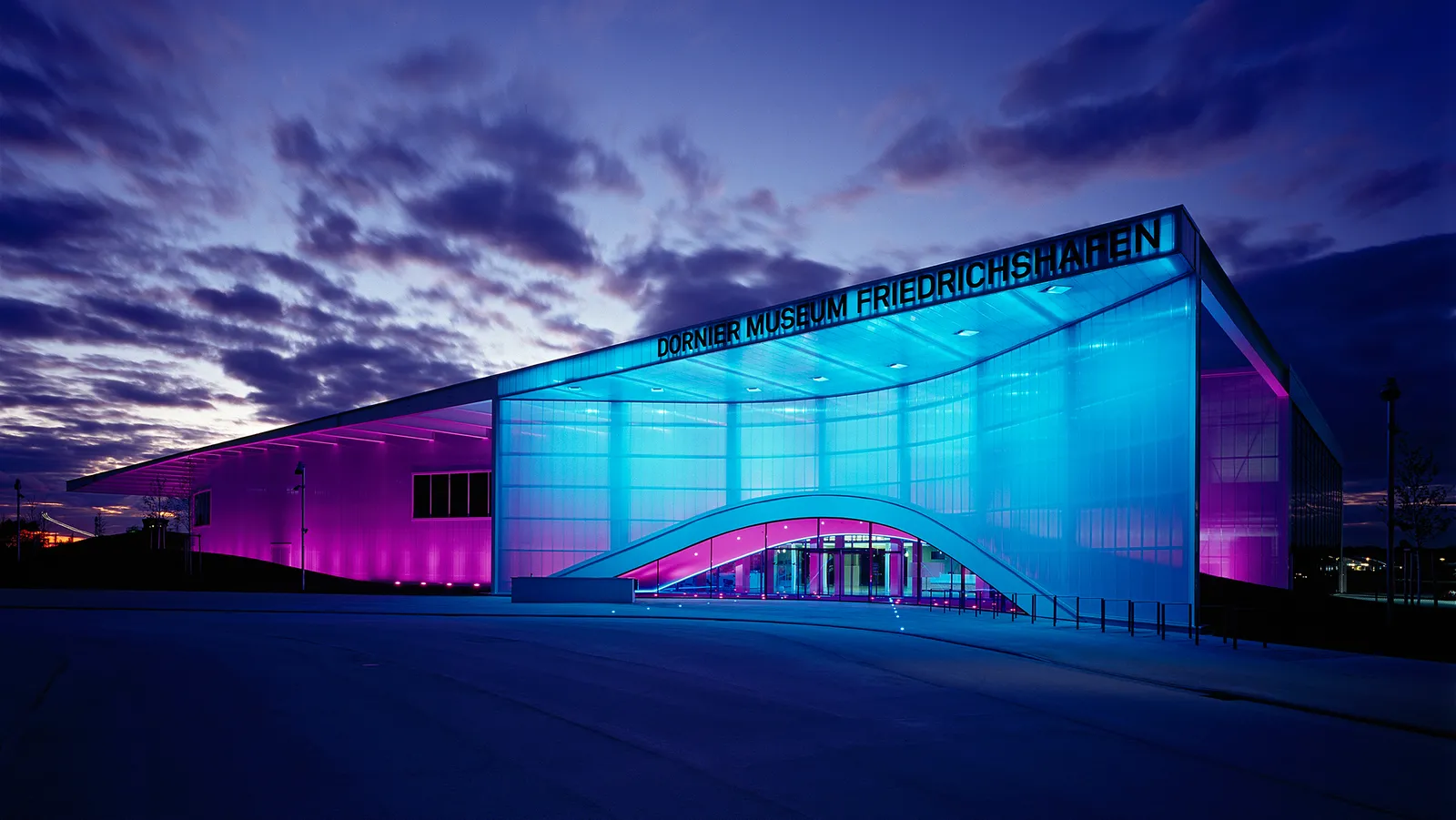
Light plays a key role in the design of the museum-hanger. A façade of translucent polycarbonate creates a vibrant, well-defined atmosphere within the exhibit space.
American light artist James Turrell designed the Night Flight installation for the Dornier Museum as part of the Architectural Light project. After sunset each day since its construction in 2009, the building stands out in the night sky as layers of vibrant color shift and interchange.
Realization:
Competition:
Specialist planners:
Werner Sobek Ingenieure, Stuttgart (Structural design)
Laux, Kaiser & Partner Ingenieursgesellschaft, Stuttgart (Building services)
Grego, Zurich (Interior design)
Atelier Brückner, Stuttgart (Exhibition design)
R+R Fuchs, Munich (Facade planning)
Transsolar Energietechnik, Munich (Energy planning)
Bobran Ingenieure, Stuttgart (Building physics)
Photography:
Brigida González
Jens Passoth
Florian Holzherr (night shot James Turell)
2014 Hugo Häring Auszeichnung
2010 Chicago Athenaeum Award
2010 Preis des Deutschen Stahlbaues