

The extension buildings of the Ministry of Defence develop from a dialogue with the existing buildings. Precisely placed, simple yet self-assured structural volumes, as well as the formation of a vocabulary of differentiated façades derived from the existing buildings, are the expression of this dialogue.
The central reception building on Reichpietschufer, known as the ‘Bendlerblock’, remains the main urban development feature, with its north-south orientation and characteristic courtyards following this axis.

The new building complex recedes in its floor plan, following the course of the road along the Reichpietschufer, forming a respectable distance to Hildebrandstraße in the westand at the same time preserving most of the existing trees. The prominence of the historic reception building is thus retained.
The small robinia forest forms a natural counterpart to the strictly defined open spaces. Under a light canopy of leaves, a natural, relaxing open space with a high quality of stay for employees is created. A circular path opens up the forest and offers opportunities to linger and relax in a peaceful atmosphere along its course.
Rainwater seeps away on site, contributing significantly to improving the microclimate. Demolition waste from the old parade ground is reintegrated in line with resource-saving material use and used to gently shape the topography of the landscape areas. The existing tree population is being preserved and supplemented with additional trees and shrubs in accordance with the planting list in the building permit agreement in order to create a permanently stable and species-rich vegetation pattern.
The three inner courtyards create peaceful, green retreats within the building complexes. Lush, structurally rich planting creates a pleasant atmosphere and supports the microclimate of each courtyard through shading, evaporation and fresh air supply. All three courtyards offer a variety of recreational opportunities for employees.
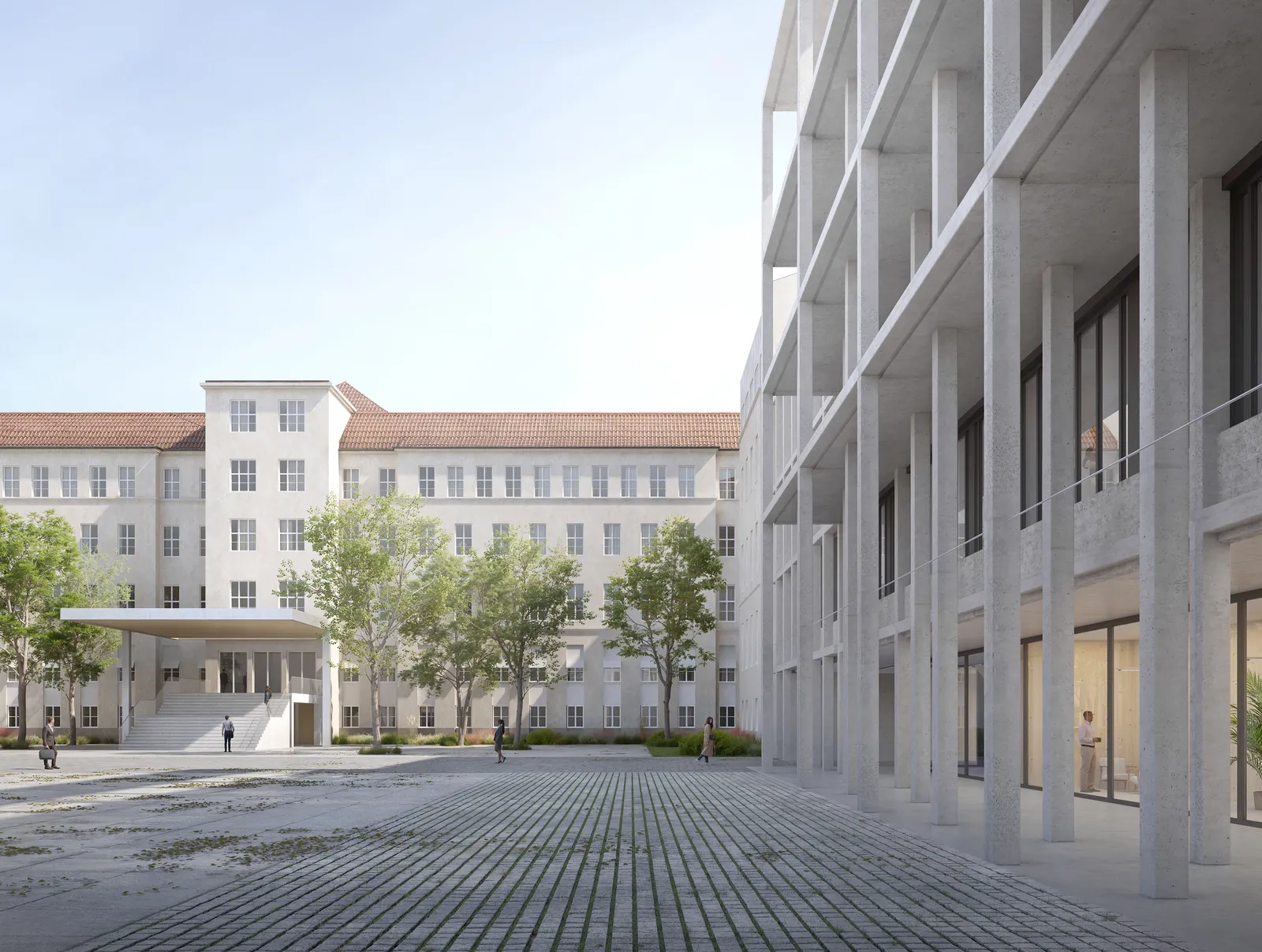
The central urban planning element of the extension is Paradeplatz. The new north and south buildings enclose it with façades that relate to each other in form, function and dimension, giving it the appropriate significance and, at the same time, a scenographic setting.
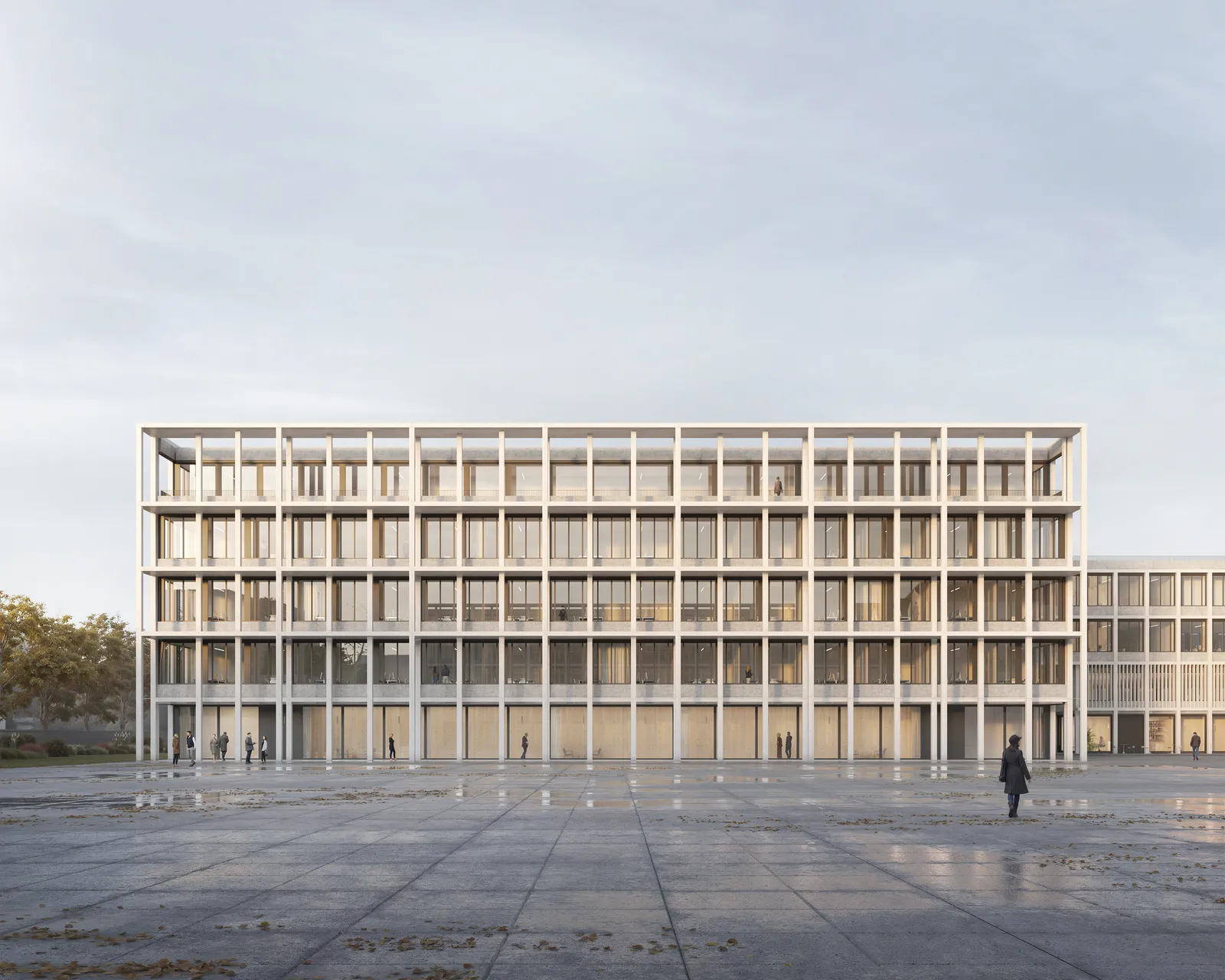
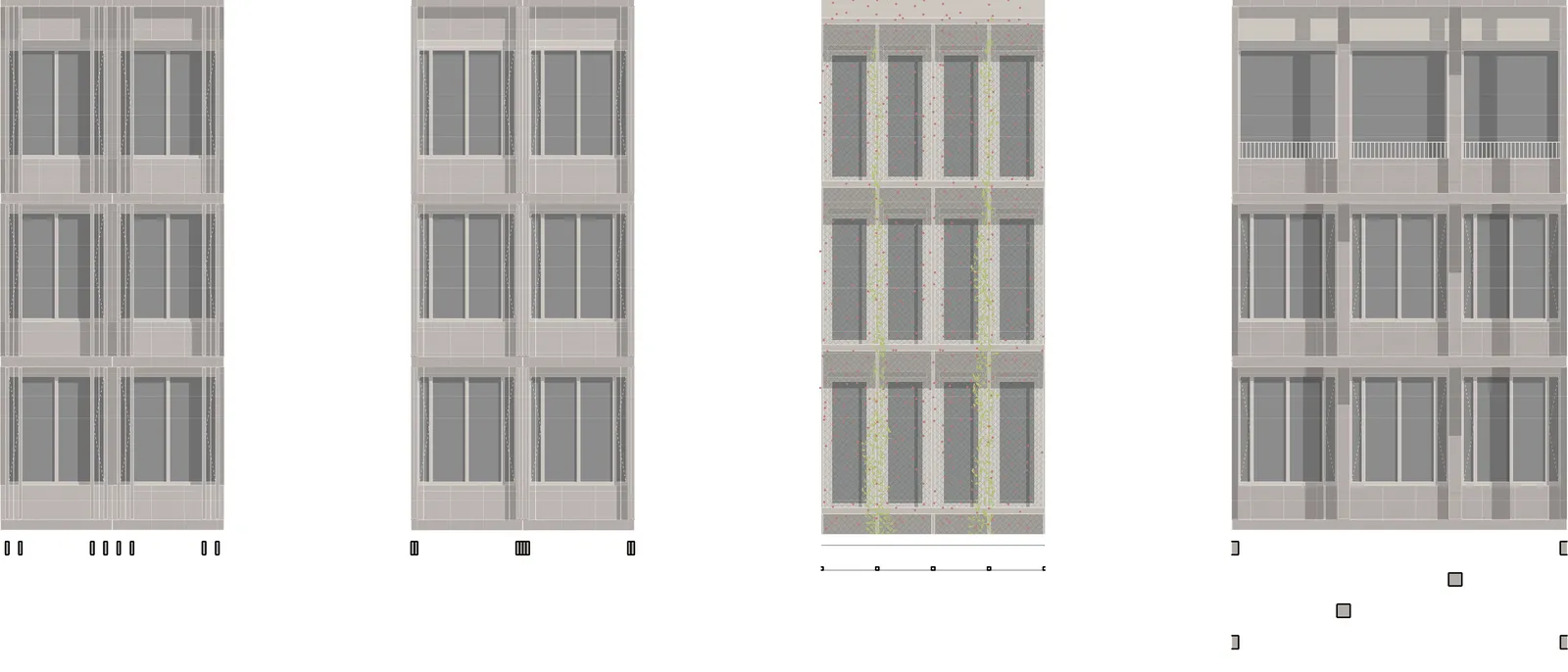
The spacious, staggered façades thus function as prosceniums for the various activities on Paradeplatz. They can be staged according to the events, as large-format projection surfaces, as a representative portico, as a colonnade protected from sun and rain, and on the top floor as a spectator balcony. The original position of the supports results from the orientation of the view towards the large staircase.
The design rounds off the western part of the Bendlerblock and strengthens its urban presence in this prominent location. The careful integration of the listed buildings creates a harmonious ensemble of old and new.
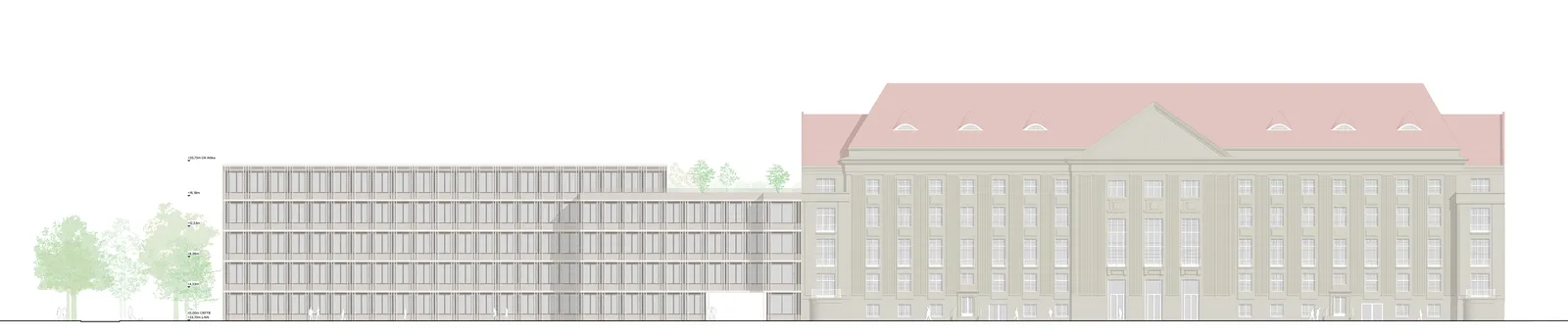
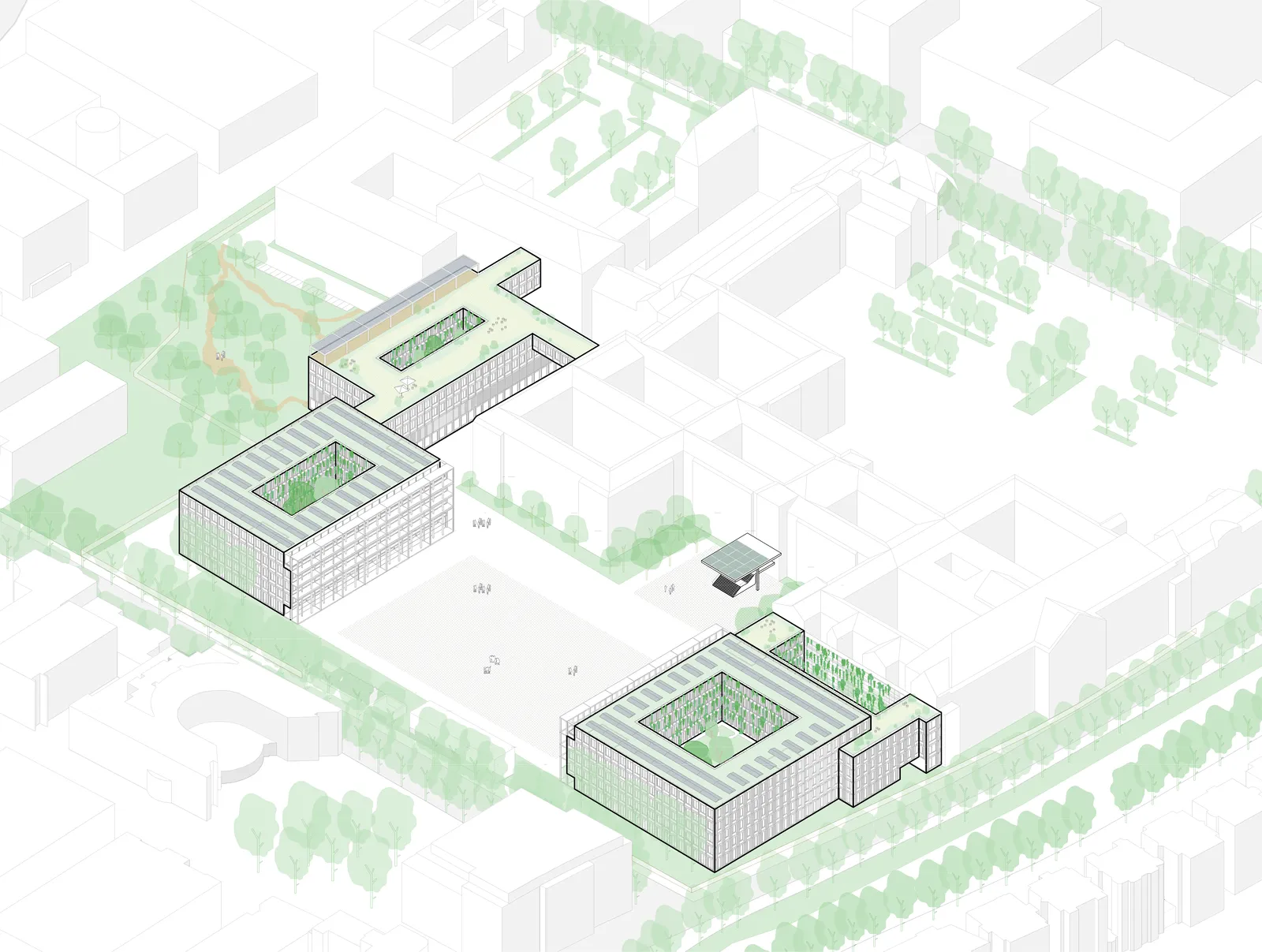
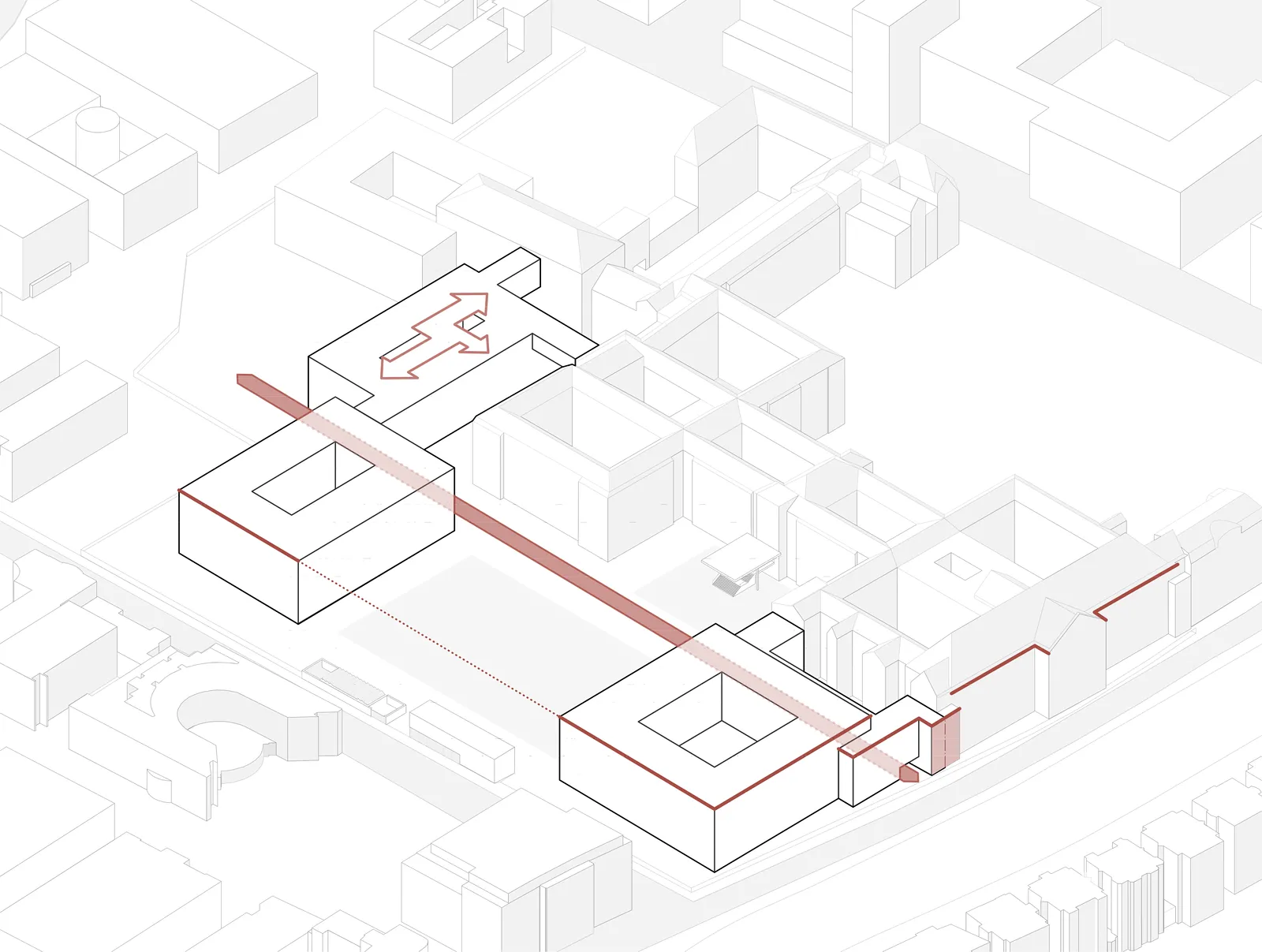
The concept is based on three structures that are clearly grouped around Paradeplatz and the Bendlerblock. A five-storey structure to the south, west of the Bendlerblock, another structure to the north of Paradeplatz, which acts as a counterpart to the southern one and also has five storeys, and a central three- to four-storey structure that connects the new buildings with the adjacent existing buildings.
In the Reichpietschufers area, the new development takes up the former perimeter block structure. The urban planning concept of a closed, orthogonal development interprets the structure of the Bendlerblock in a contemporary way and is staggered along the building line. In terms of height, the new buildings are subordinate to the listed main building, but develop an independent, appropriate presence. The end risalit of the existing building is taken up and continued architecturally. At the interface between old and new, a sensitive transition is created, mediated by a four-storey zone with a roof terrace, which makes the dialogue between the existing building and the extension architecturally visible.
The design of the outdoor facilities for the Federal Ministry of Defence creates a representative, functional and, at the same time, identity-forming design that meets the special, highly functional requirements of the location. Clear spatial structure, sustainable choice of materials and a high quality of stay characterise the outdoor spaces.

Competition:
Specialist planners:
terra.nova Landscape Architecture
hppberlin Fire Protection Engineers
Visualization:
flooer Studio