

On the Goslar shore of Mierendorff Island, a mixed-use neighbourhood is being created between perimeter block structures, large-scale commercial buildings and the banks of the Charlottenburg Canal. The site, which is currently largely sealed off and features a distinctive tree population, is being transformed into a sustainable development on a historically industrial site. The project is based on ecological, economic and social goals: reduction to what is structurally necessary, recyclable materials, climate-friendly construction and robust, long-term usable open spaces.
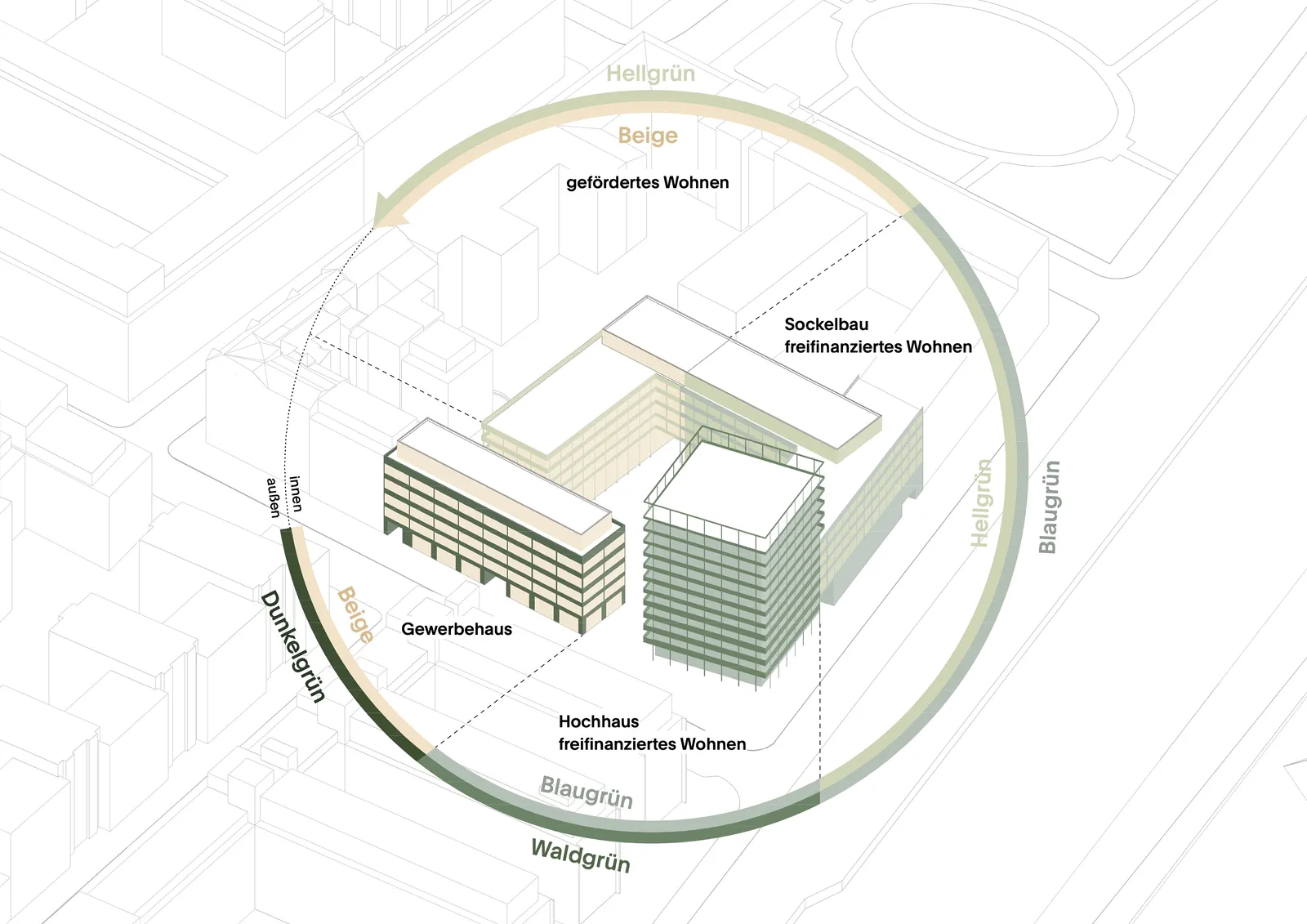
Three core uses – commercial, privately financed and subsidised housing – are arranged in such a way that physical division is possible. Commercial buildings (south-west) and the northern block adjoin the property boundaries and complement the streetscape. A striking high point on the southern corner strengthens the address and responds proactively to a possible future bridge connection. The rotation and recess of the high-rise building creates a high-quality forecourt on the riverbank, activated by public uses on the ground floor. Moderate building heights – predominantly 6–7 storeys, with a high point of 11 storeys – ensure lighting, air circulation and good neighbourhood compatibility. Generous passageways and joints connect the street space and courtyard, improve orientation and create graduated open space qualities from public to private.

The inner courtyard forms the green centre: a publicly accessible play area with table tennis, a water feature using rainwater, sand and balancing facilities. A staircase and ramp structure the transitions between the public and private courtyards. Play areas close to the apartments, private gardens and terraces on the ground floor are divided by green boxes and shrubbery. In addition, dry biotope areas, bicycle parking spaces and versatile roof gardens with play areas, urban gardening, communal terraces and biodiversity components such as insect habitats and beehives are being created. A rainwater concept with cisterns, retention and infiltration supports climate adaptation and irrigation.
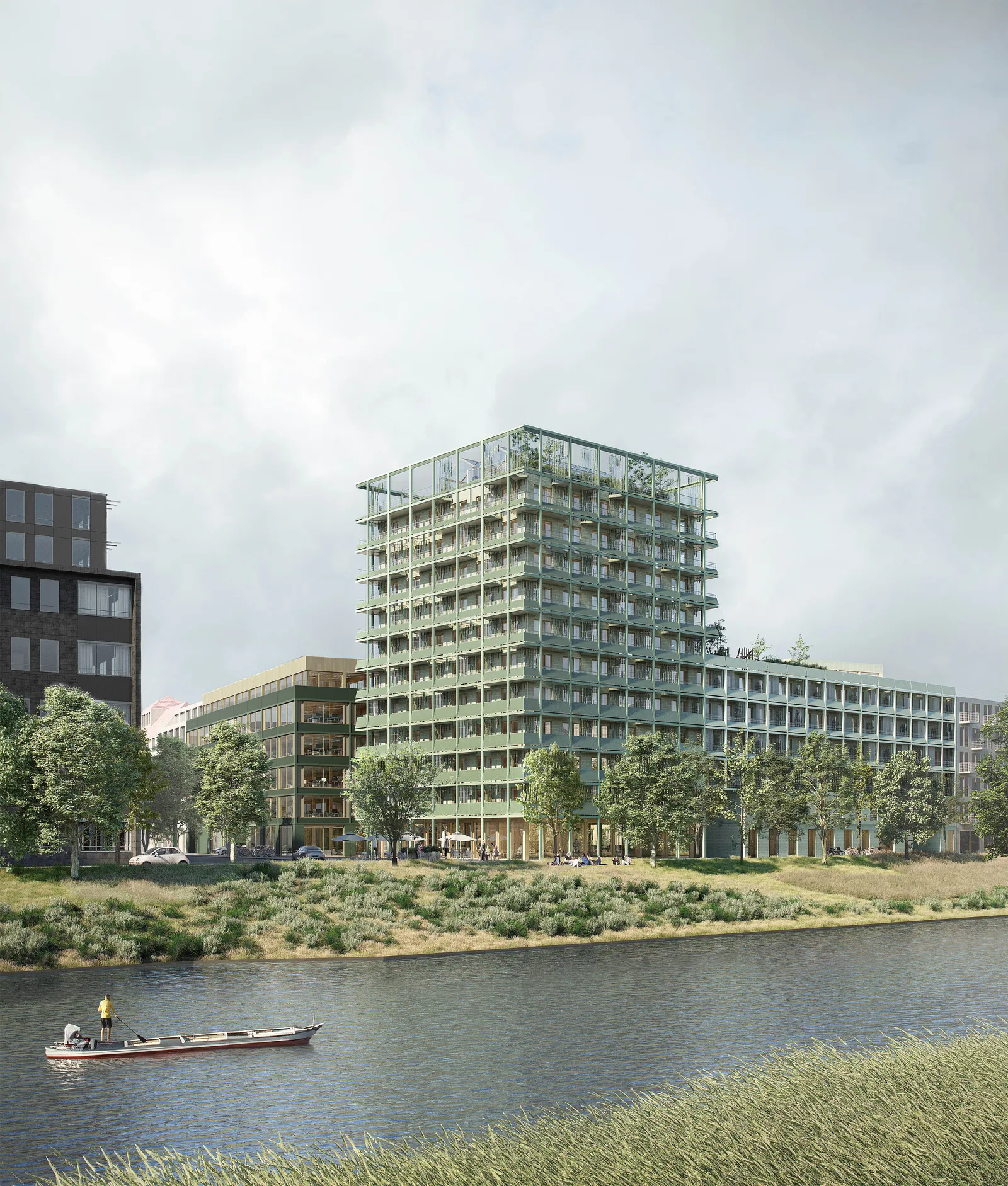
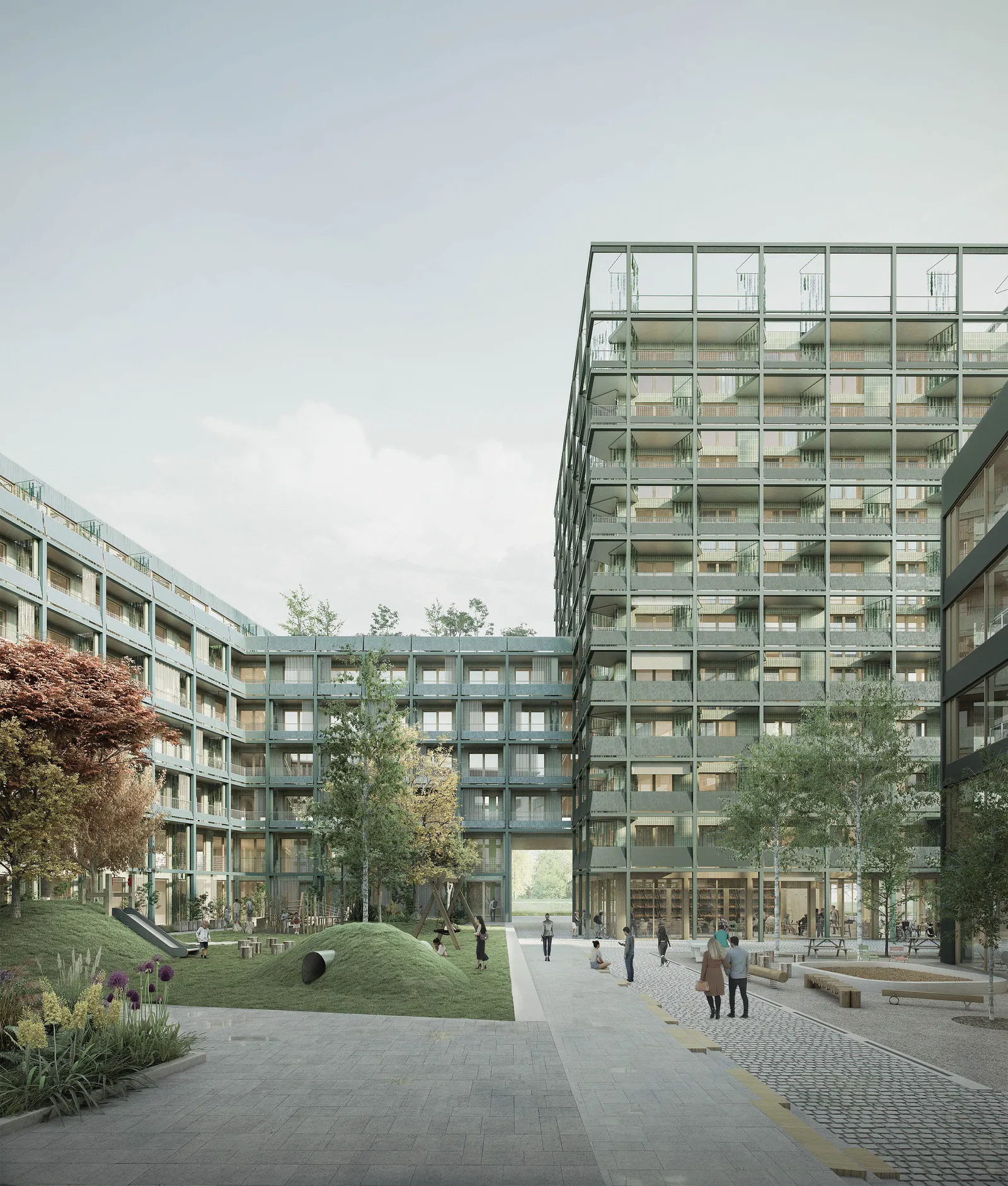
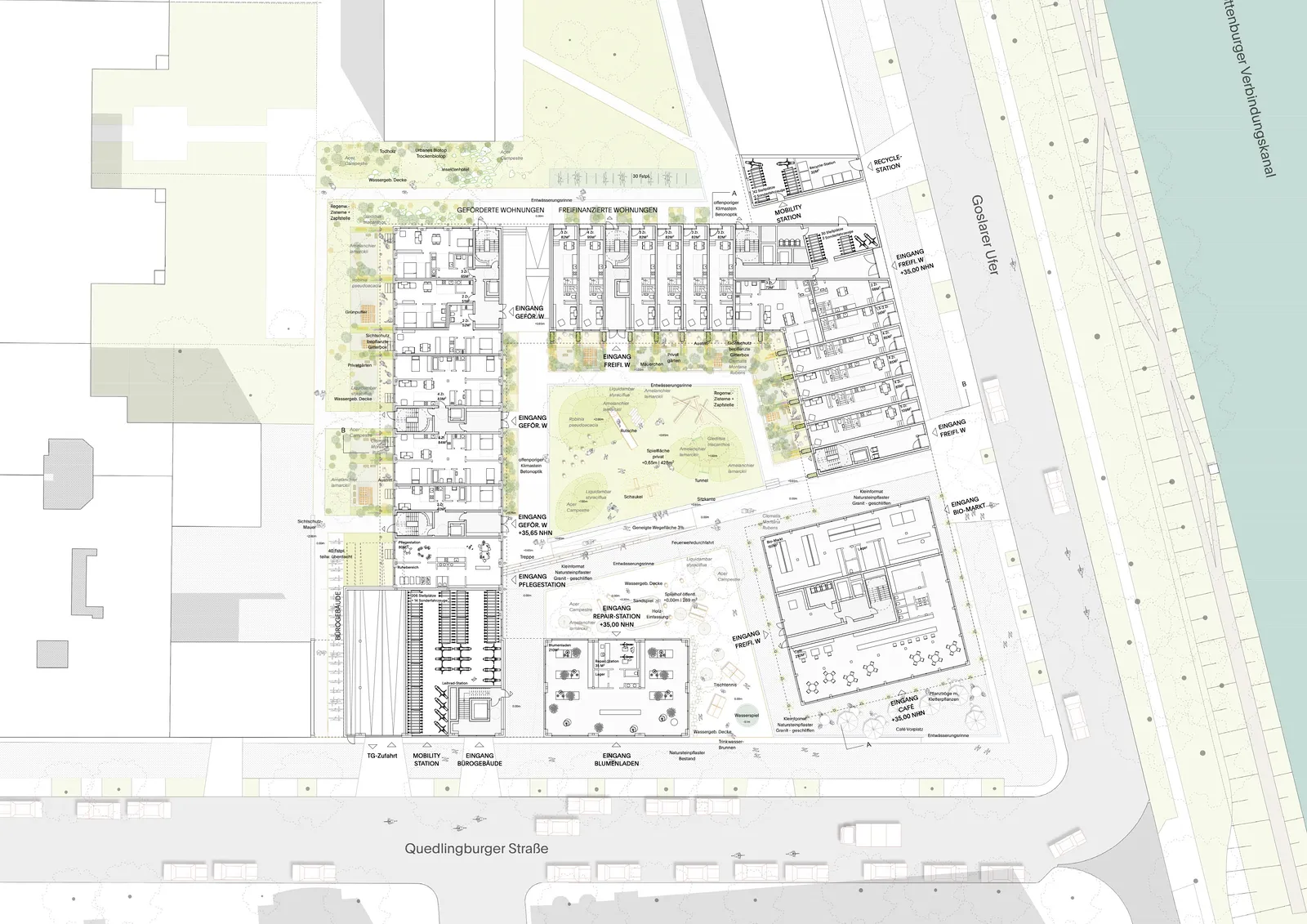
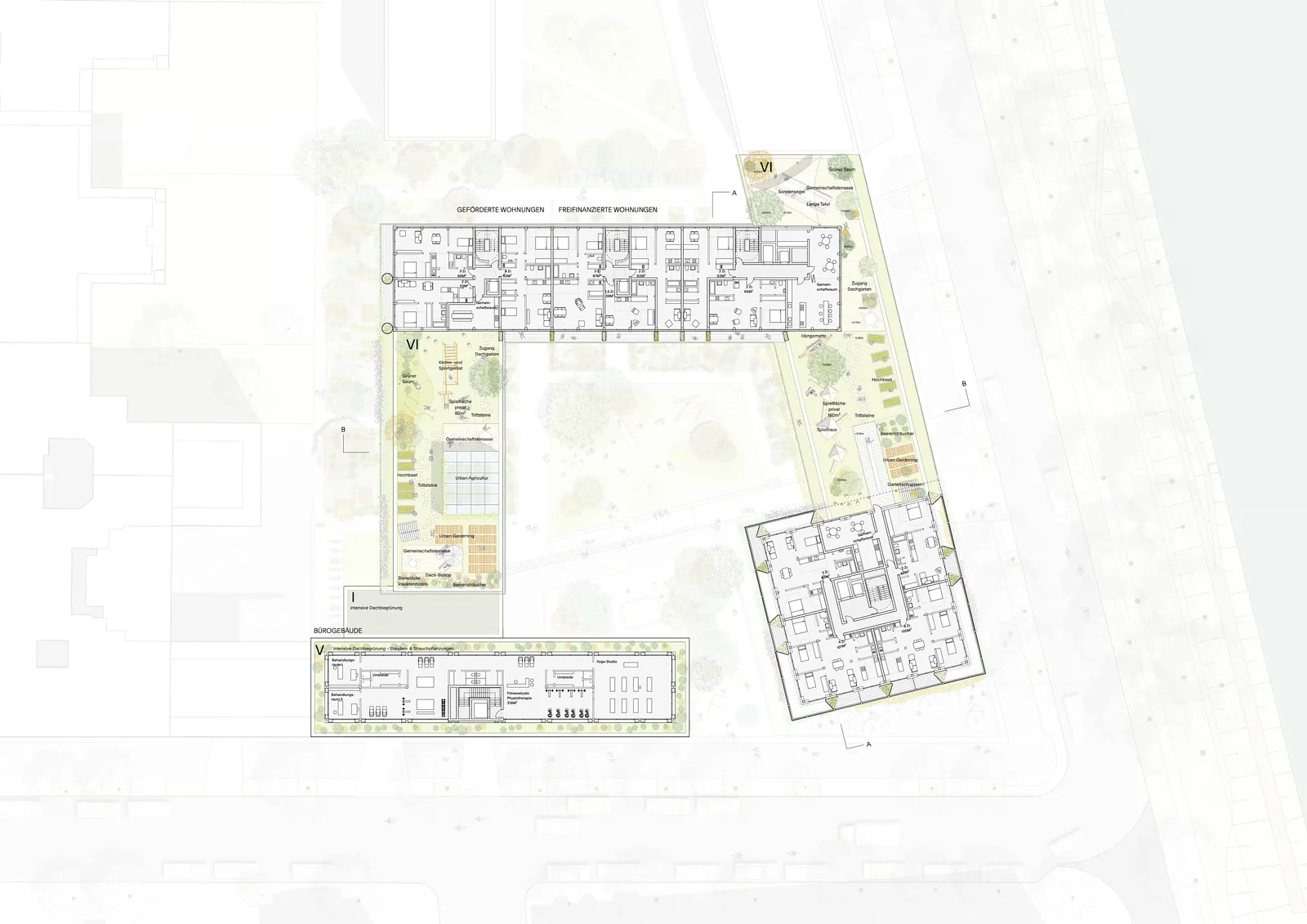
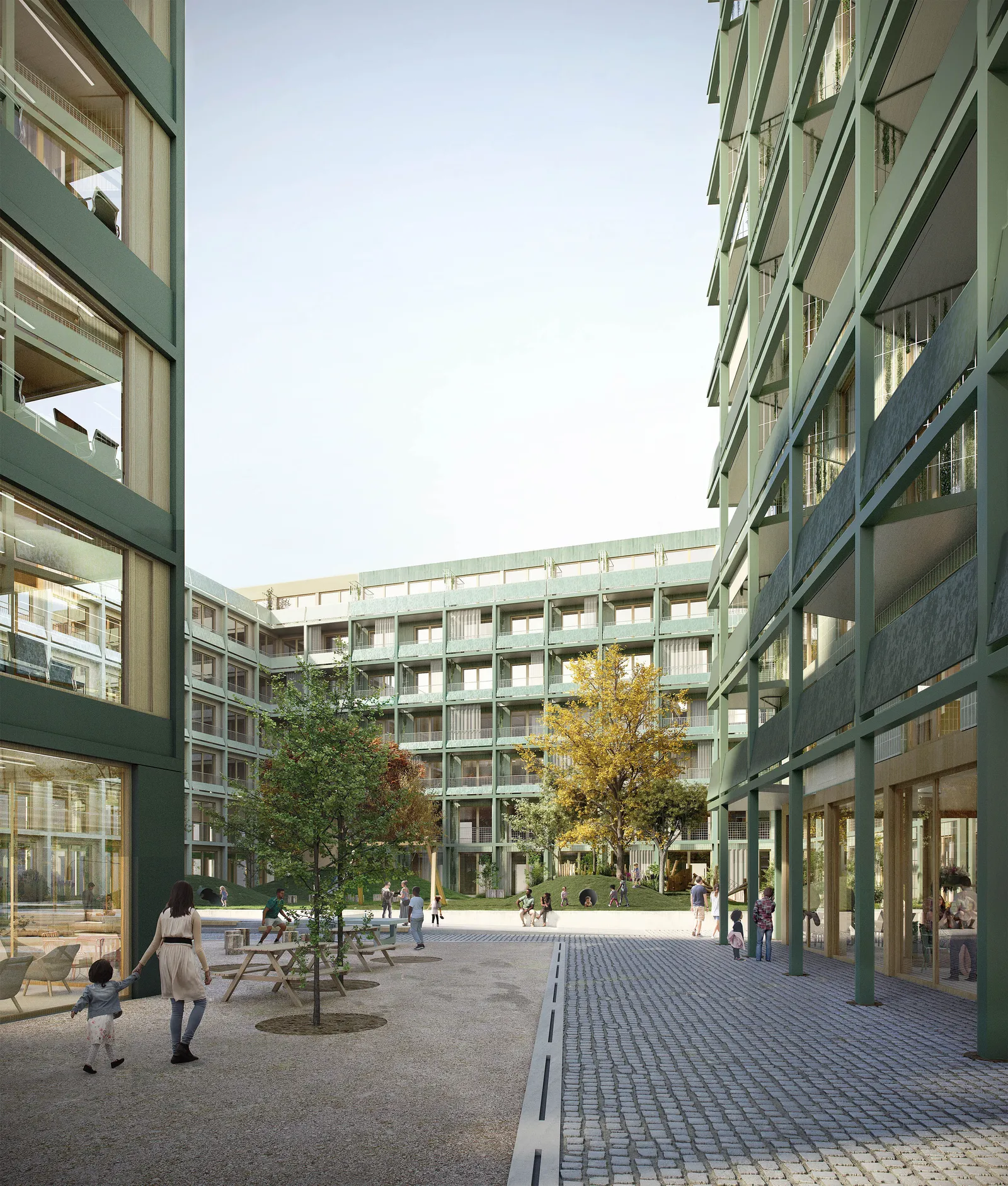
The four-metre-high activated ground floor zone defines the base area of the building structures. With commercial use in the western building structure and on the ground floor of the high point in the south of the property, these open up invitingly to the public space with generous window fronts. The childcare facility is accessed from the protected inner courtyard and has access to the public play area in the south, as well as to a private green area in the west.
The northern part of the block is located on the mezzanine floor to ensure the privacy of the ground floor apartments. Along the waterfront promenade and in the northern block, townhouses are arranged as a particularly attractive form of living over two floors and are visible in the façade as a parceling. The main entrance for privately financed housing on the upper floors also fits into this picture. The recesses in the façade on the waterfront clearly mark the entrances, thus strengthening the address formation and at the same time providing a covered and protected entrance to the interior.
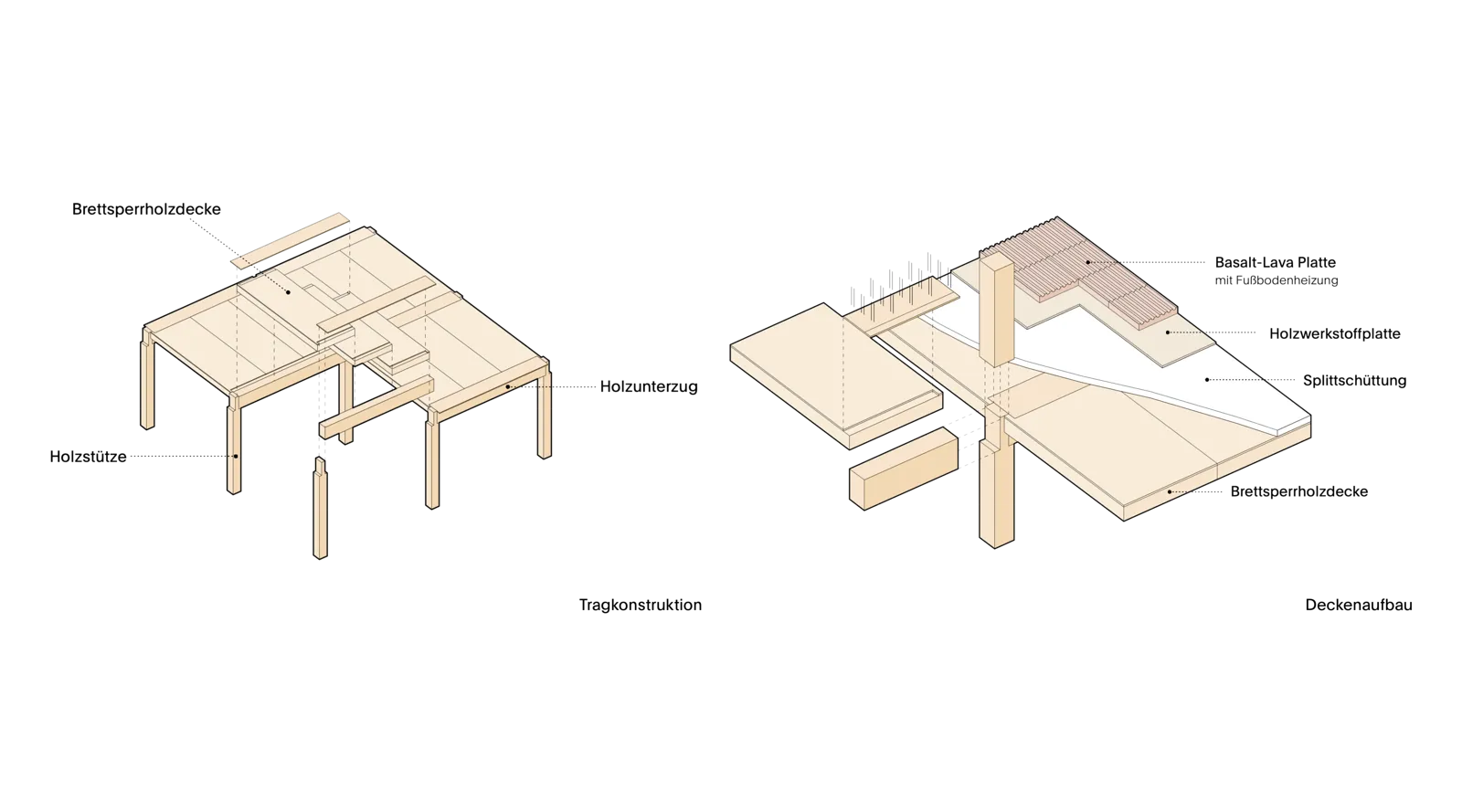
The high-rise building, the east wing and large parts of the north wing contain privately financed flats, while the rest of the interior space is occupied by subsidised flats. The timber frame construction allows for a high degree of flexibility in the organisation of the residential units.
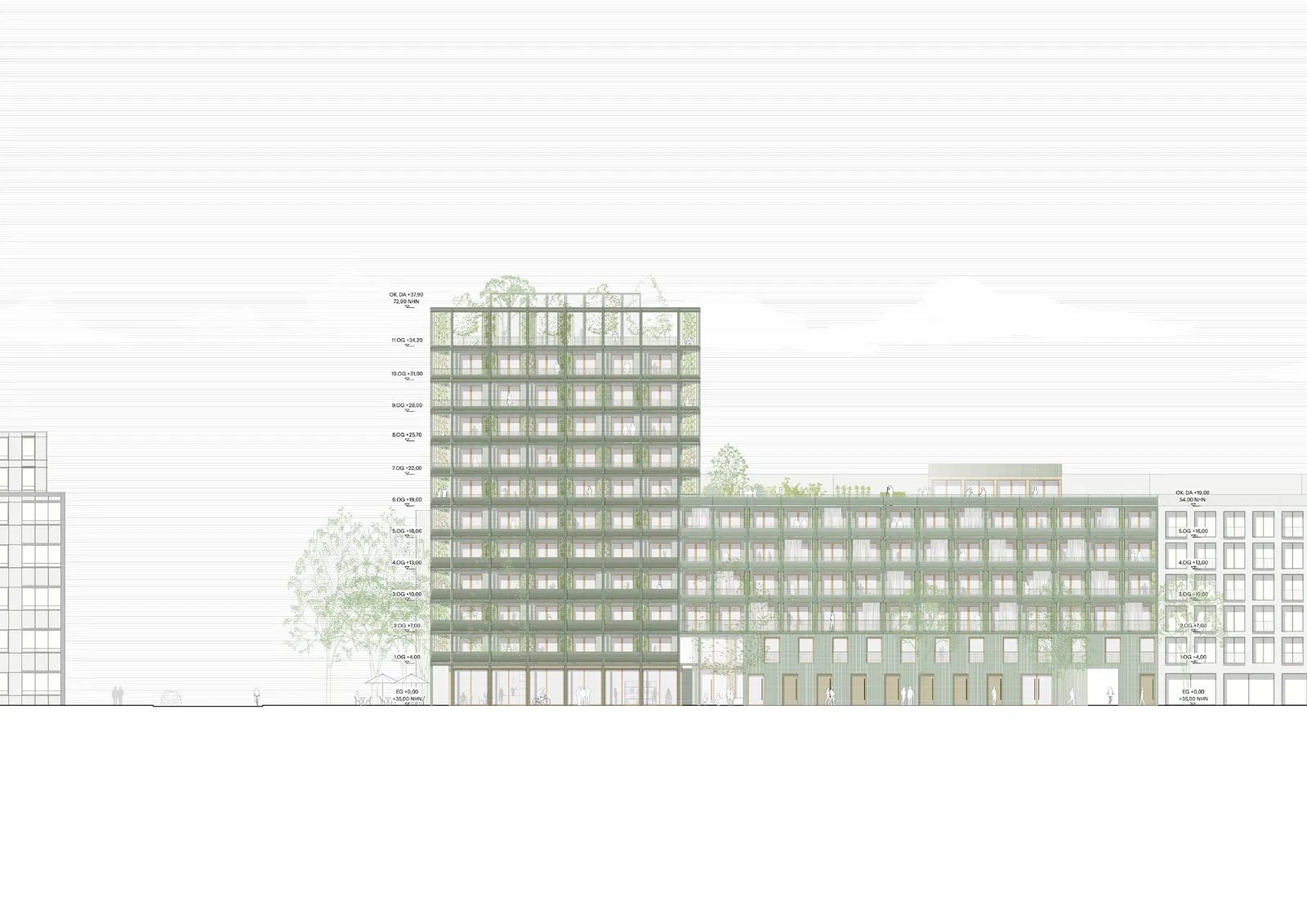
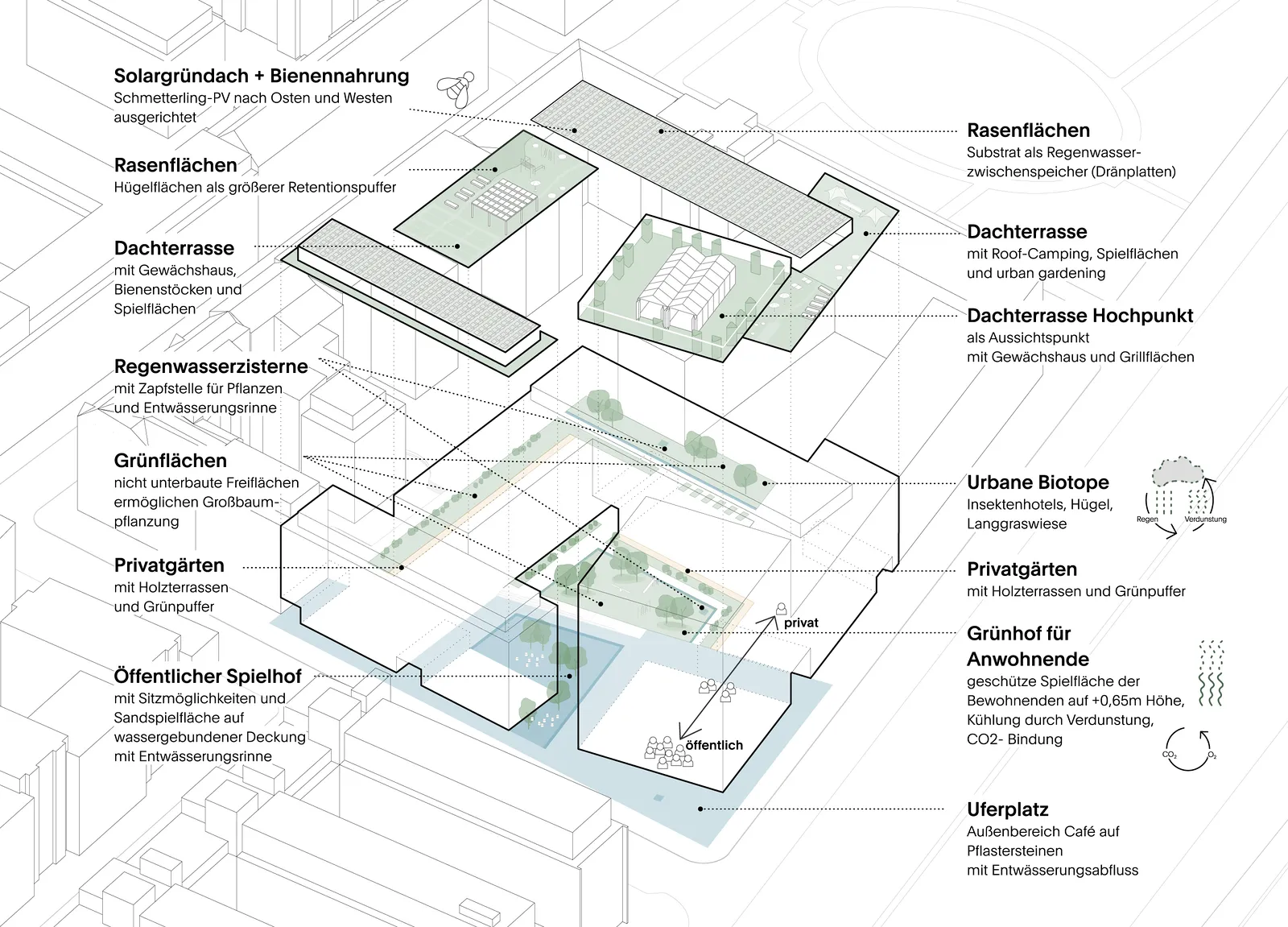
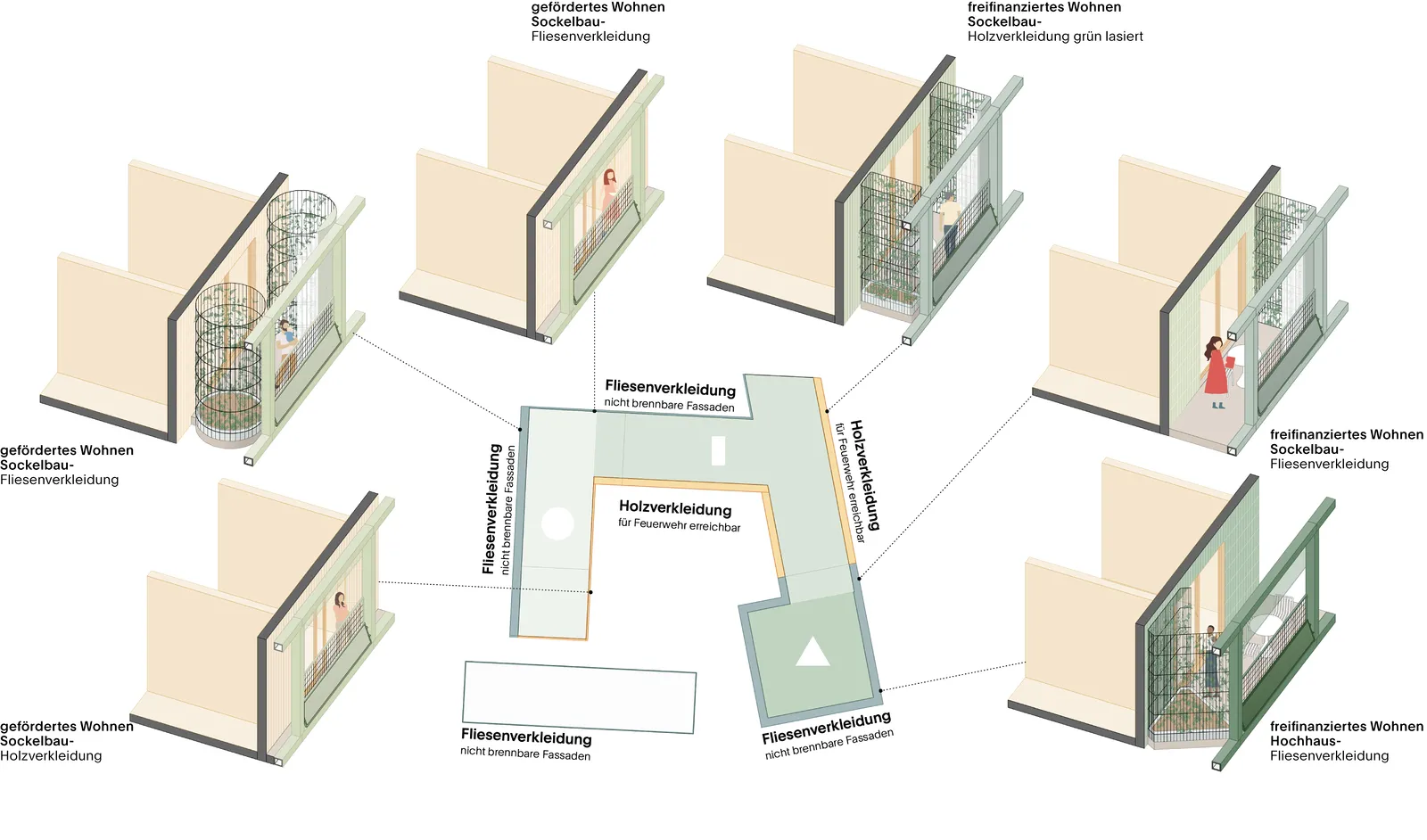
Each part of the building has two façade layers. The outer façade consists of a filigree steel structure and photovoltaic panels installed within it to maximise energy yield. The inner façade of the thermal envelope consists of a timber stud wall with cladding and timber windows. Climbing plants improve the microclimate and provide privacy; PV parapets are staggered depending on the context and yield.
The outer façade cladding is always one shade darker than the inner cladding. In order to visually interlink the buildings, the inner façade colour becomes the outer colour of the adjacent part of the building in a clockwise direction. Similarly, the overall colour becomes lighter the further the building turns into the interior.
In designing the building, great importance is attached to ecological, economic and social sustainability. Since a large proportion of the energy and emissions generated by a building over its life cycle are already produced during the construction phase, the efficient use of building materials is crucial for the sustainability of the building. Materials are scrutinised for their suitability at every stage of the design process and used in a resource-efficient manner.
Composite materials are not used. The high degree of prefabrication significantly reduces the construction time. Easy dismantling of the details ensures that the components can be reused in the future. Natural materials are also predominantly used in the façades and interior fittings, with particular attention paid to separability.
Competition:
Specialist planners:
Rabe Landschaften (Landscape design)
C4 engineers (Structural design)
IB Hausladen Berlin (Supply engineering)
hhp Berlin (Fire proofing)
Visualization:
Flooer Studio