
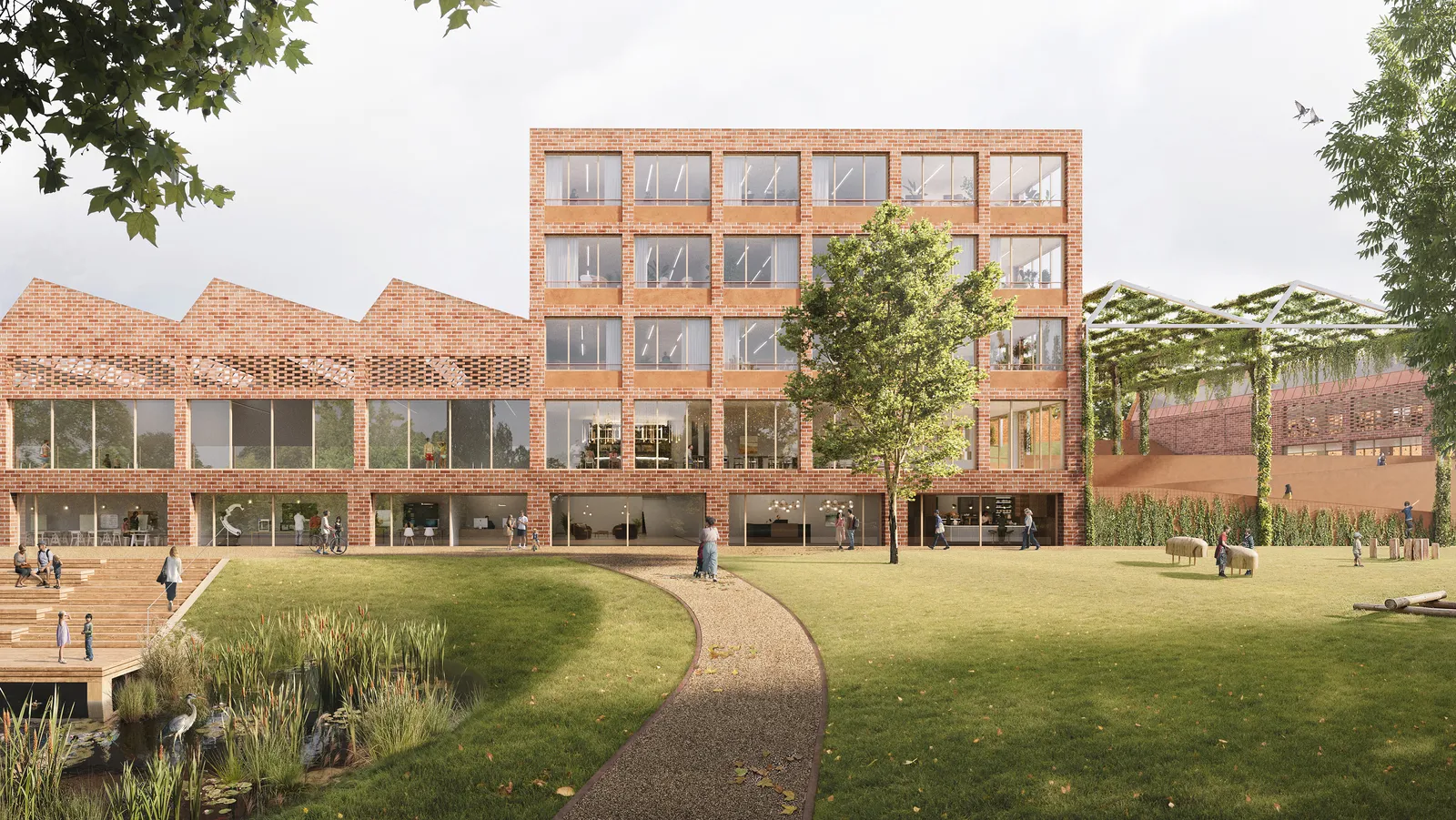
The proposed solution for the Rhombus innovation district develops a holistic and coherent overall urban development concept for the area to be transformed. The reactivation of the brownfield site holds enormous potential for an attractive and future-oriented urban district, not least because of its central location and the special charm of its industrial past.
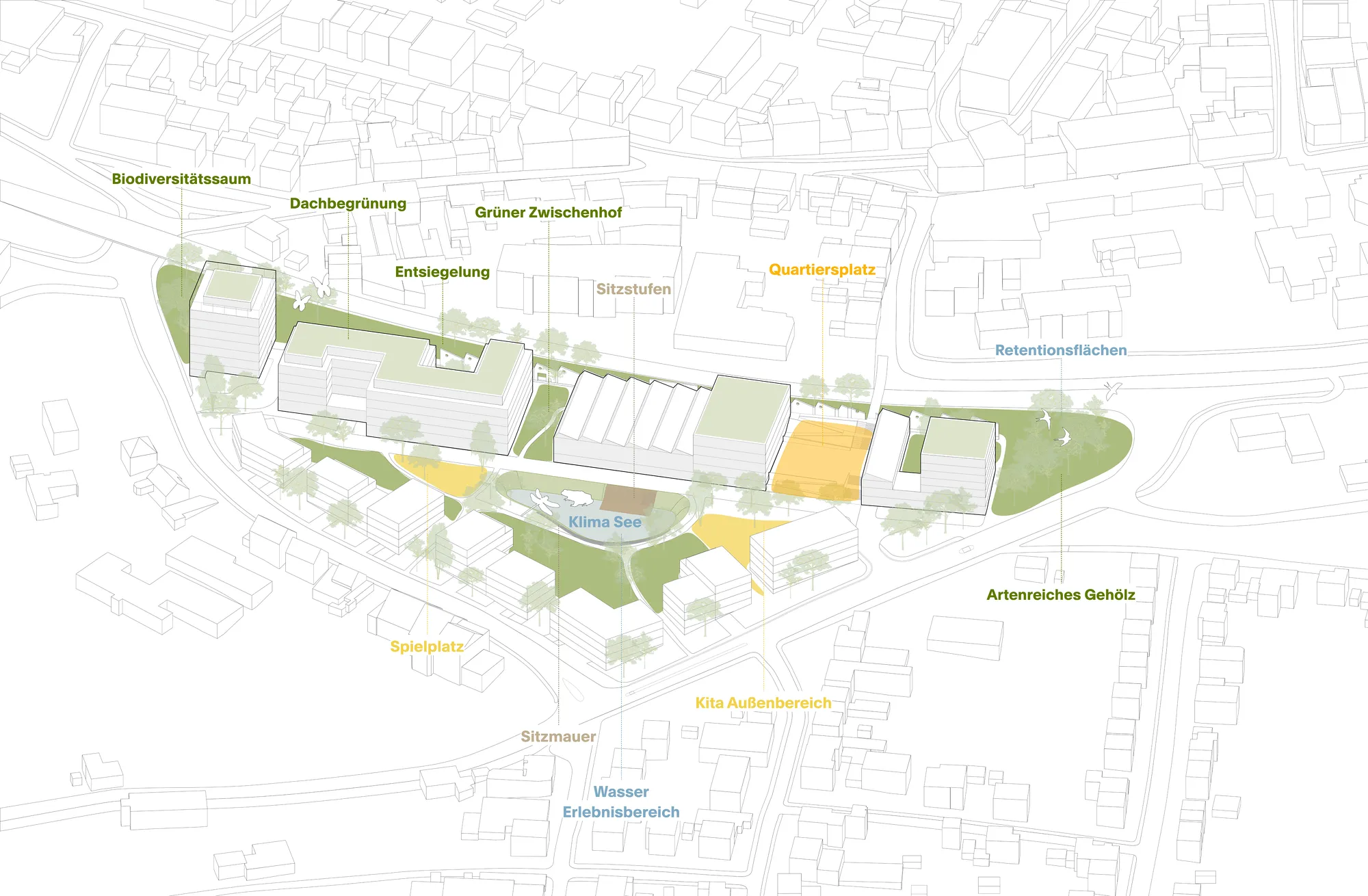
Building on the present study, the concept specifies the open space design and development structure of the quarter – including a promenade, neighbourhood square and climate lake – as well as the urban design of central buildings such as the health tower, senior care facility, Rhombus Campus and Innovation House. The aim is to significantly improve the quality of life and create a lively, mixed-use neighbourhood with a wide range of uses.

The footbridge over the B51 provides optimal access to the city centre for pedestrians and cyclists. Attractive ramps connect the different levels of the neighbourhood and enable barrier-free access. A publicly accessible lift in the foyer of the Rhombus Campus makes it easier for people with limited mobility in particular to access the neighbourhood square level. The transition from the promenade to the neighbourhood square is inviting and fluid in design.
Both open spaces complement each other functionally and atmospherically: the spacious promenade not only serves as a central access axis for pedestrians and cyclists, but its design also invites visitors to linger and stroll. The entrances to the swimming pool and the clubhouse/academy, as well as the academy's creative rooms and innovation laboratory, are open to visitors and invite them to enter.
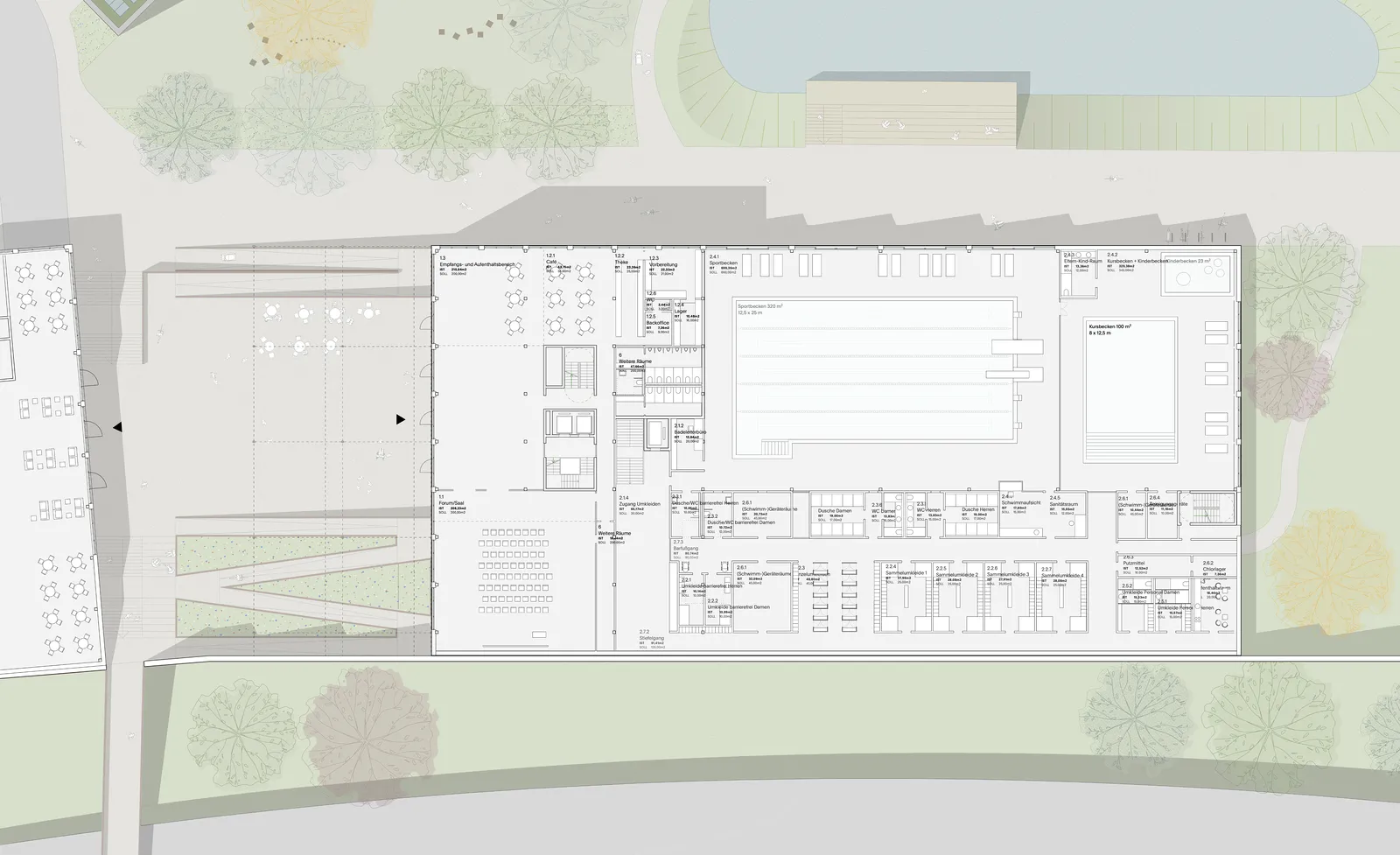
Together with the Rhombus Campus, the neighbourhood square forms a versatile ensemble. The foyer extends along the façade of the square, opening it up to the square and creating a threshold-free transition between the exterior and interior. This allows the square to be flexibly integrated into events and, in summer, to temporarily expand the building as needed.
The positioning of the underground car park entrances in the immediate vicinity of the eastern and western district entrances enables the creation of a traffic-calmed urban district. There are no plans to allow motorised private transport to pass through. Only delivery, emergency and waste disposal vehicles will be granted access to the promenade zone – and then only when absolutely necessary.



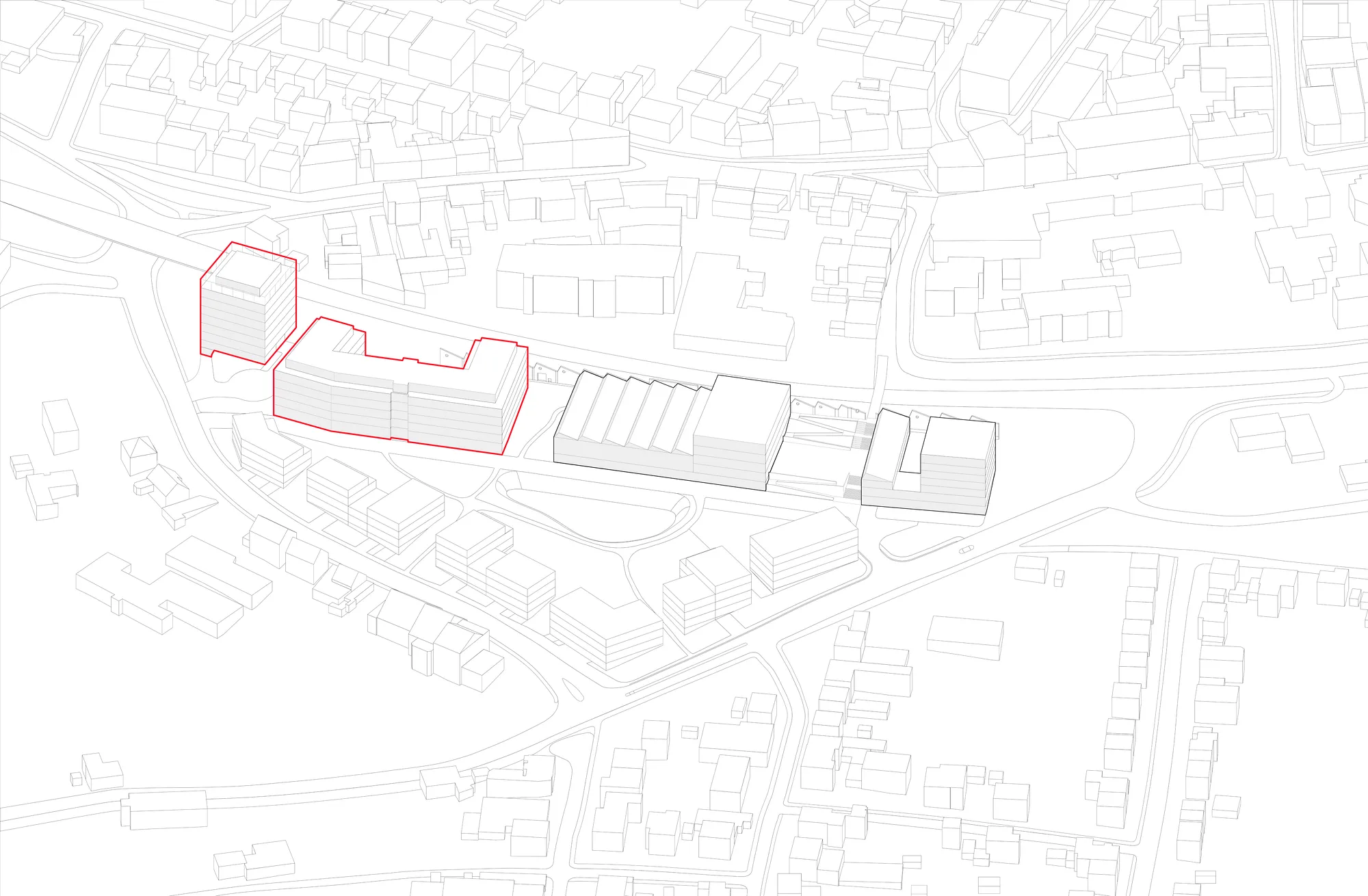

The alignment and adaptation of the building structures in line with the structure of the existing shed façade is seen as a fundamental measure for developing the quarter in harmony with this relic from the past. The rhythm of the historic shed structure has a decisive influence on the building ensemble of the Rhombus innovation quarter: the new structures are consistently oriented along the axes of the existing façade.
The historic wall is repeatedly visible in the spaces between, while architectural analogies are created in other places. One example of this is the Rhombus Campus, where the swimming pool takes up the characteristic design language. A special design element is the free-standing steel structure on the neighbourhood square, which supports the remaining shed façade and visually extends it to the promenade. In this way, the industrial heritage of the area is embedded in the new neighbourhood structure in a diverse and identity-forming manner.
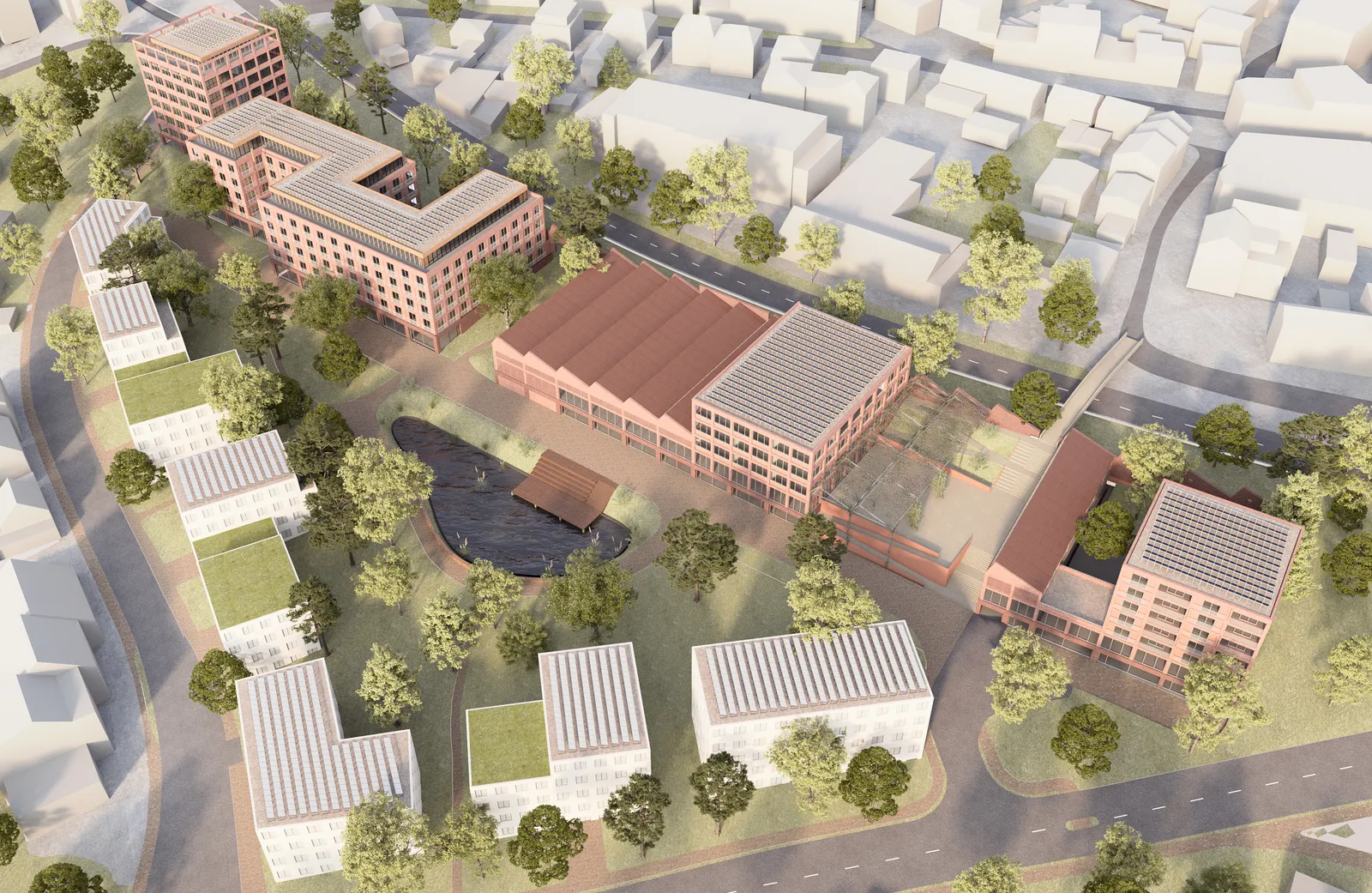

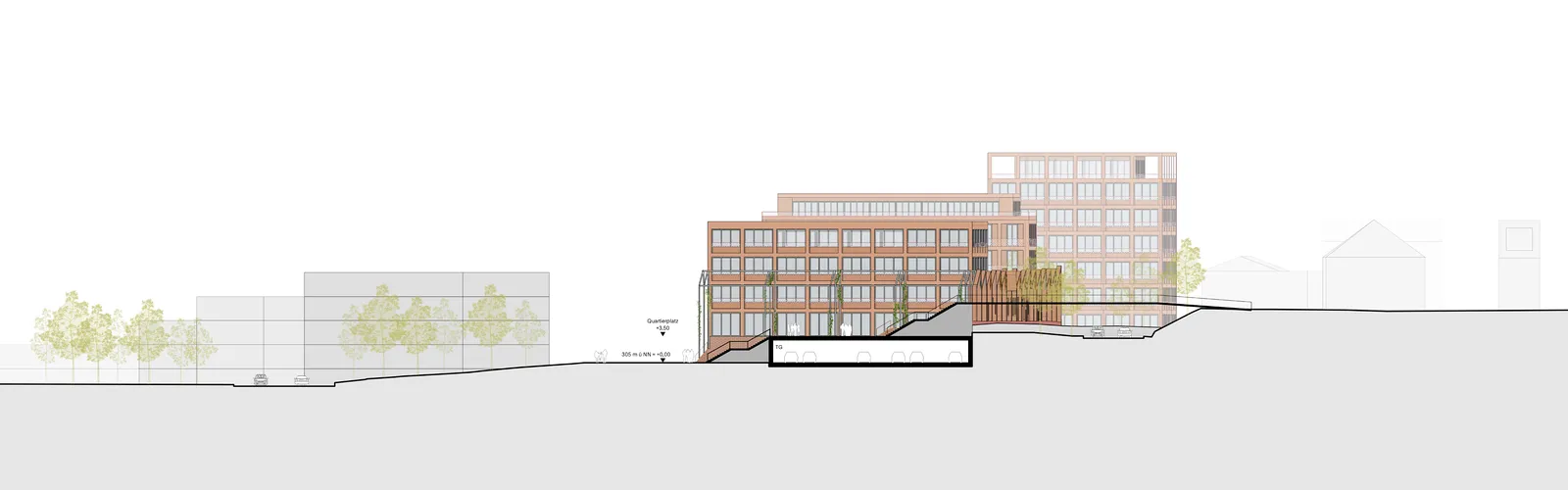
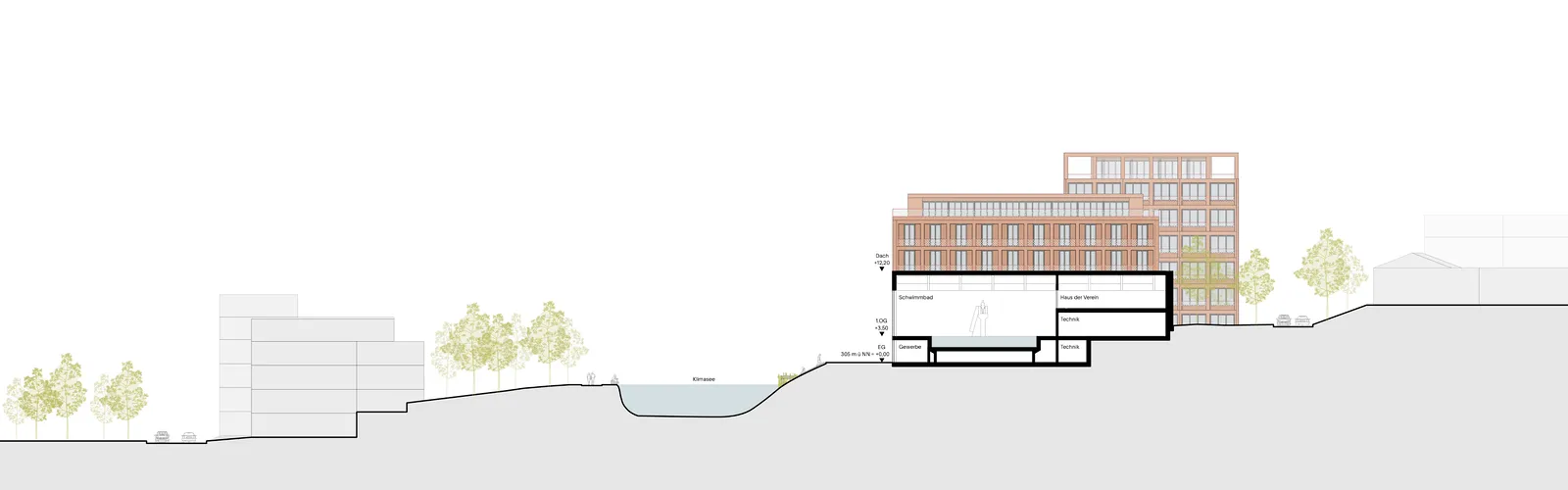
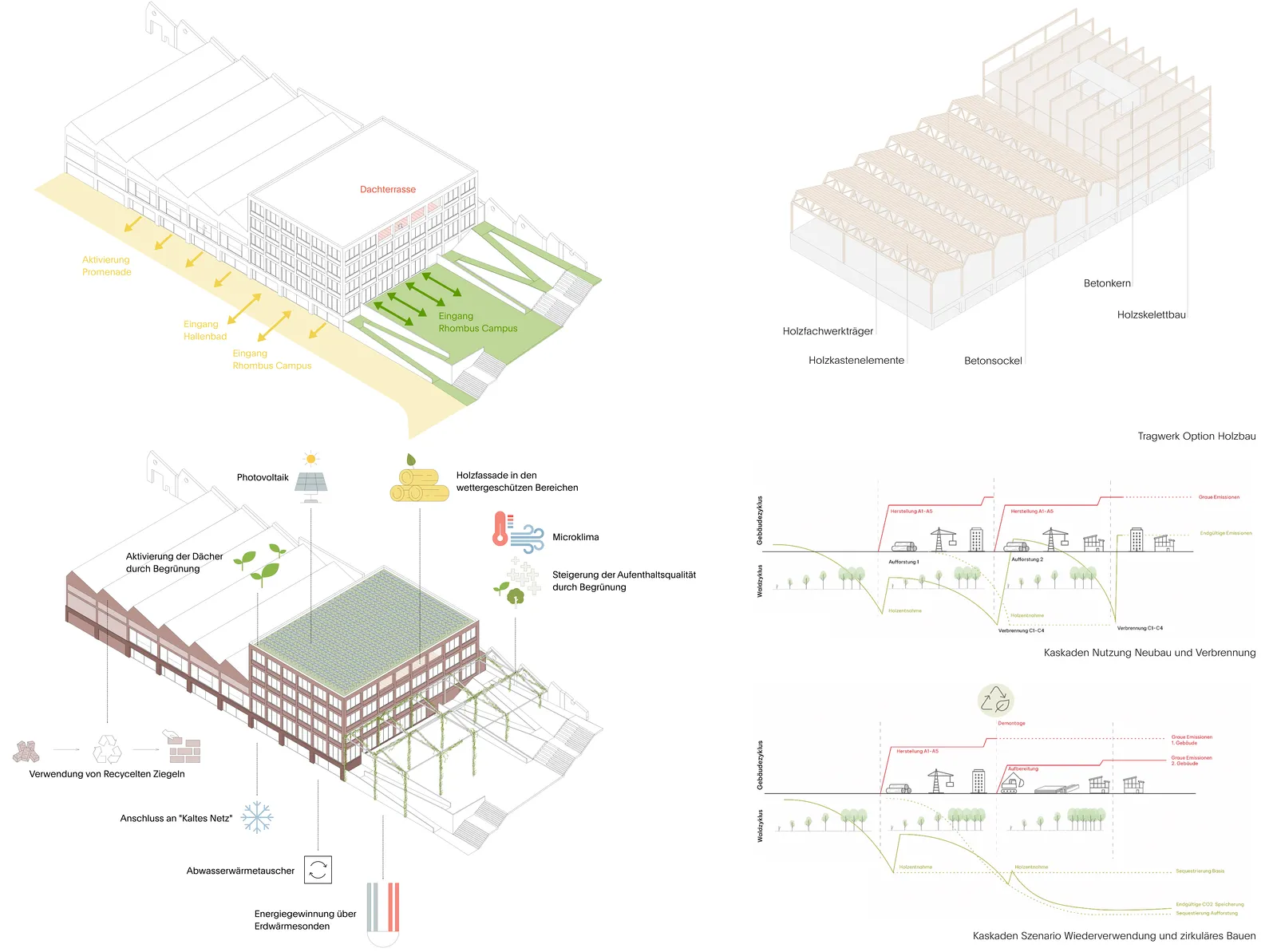
To break up the long façade of the senior care facility along the promenade, a meandering building structure with projections and recesses is proposed. This ensures a varied façade design both towards the promenade and the residential buildings opposite. The new building meets the requirements of the space allocation plan in terms of bed numbers and living space. The health tower also meets the requirements of the space allocation plan. A slight rotation allows it to blend more harmoniously into the overall structure of the senior care facility, Rhombus Campus and Innovation House. The Rhombus Campus forms the central building block of the innovation quarter and is intended to serve as a ‘lighthouse’ project for Wermelskirchen. The original building volume can be implemented on the private property without restricting development on the public area.
Similar to the Rhombus Campus, the Innovation House picks up on the design language of the shed structure and, with its representative façade, forms a striking conclusion to the neighbourhood square. The lower floors will house flexible office and commercial space for companies and start-ups. The highest point of the building will accommodate flexible, high-quality apartments and set an urban accent on the southern edge of the ensemble.


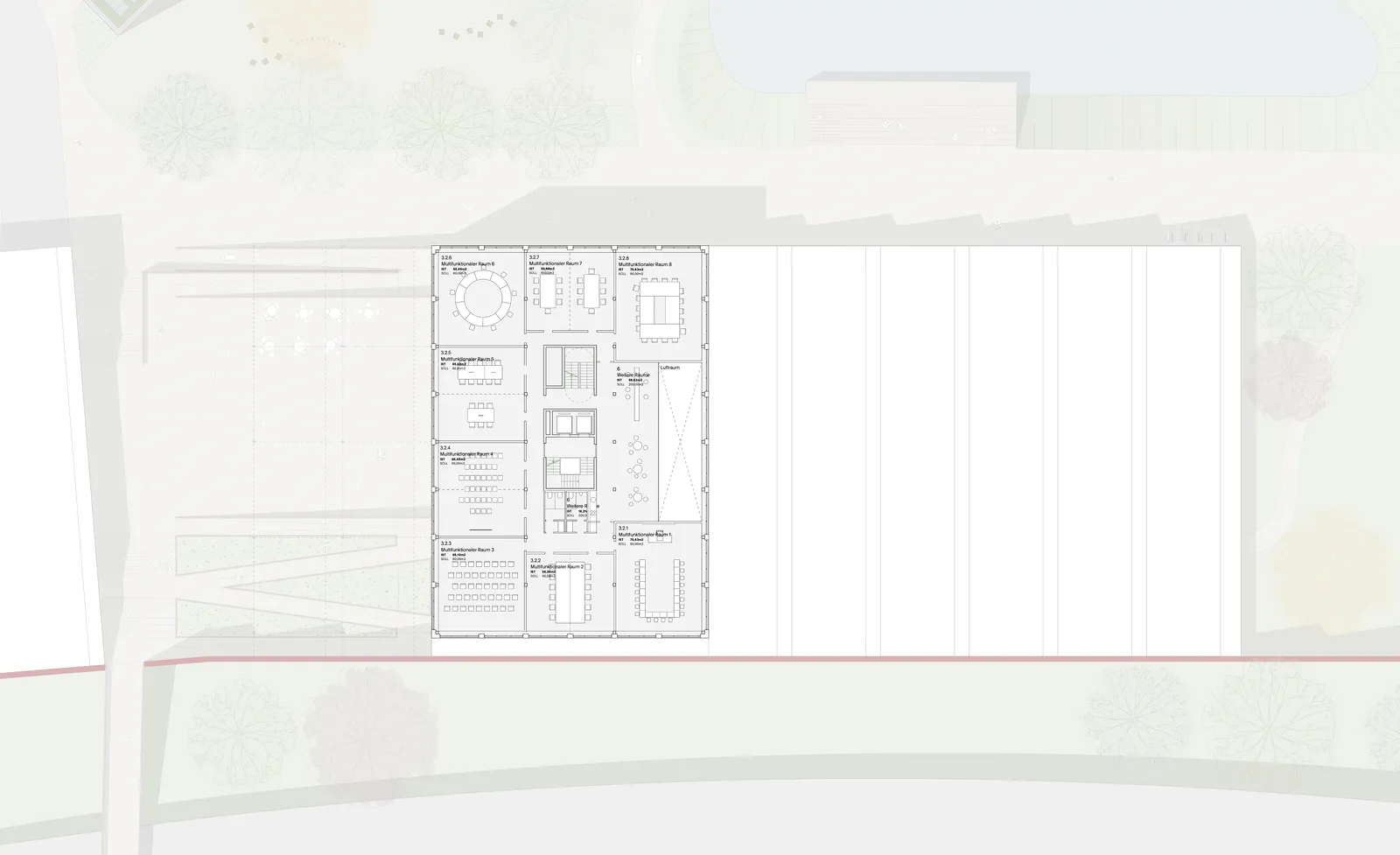
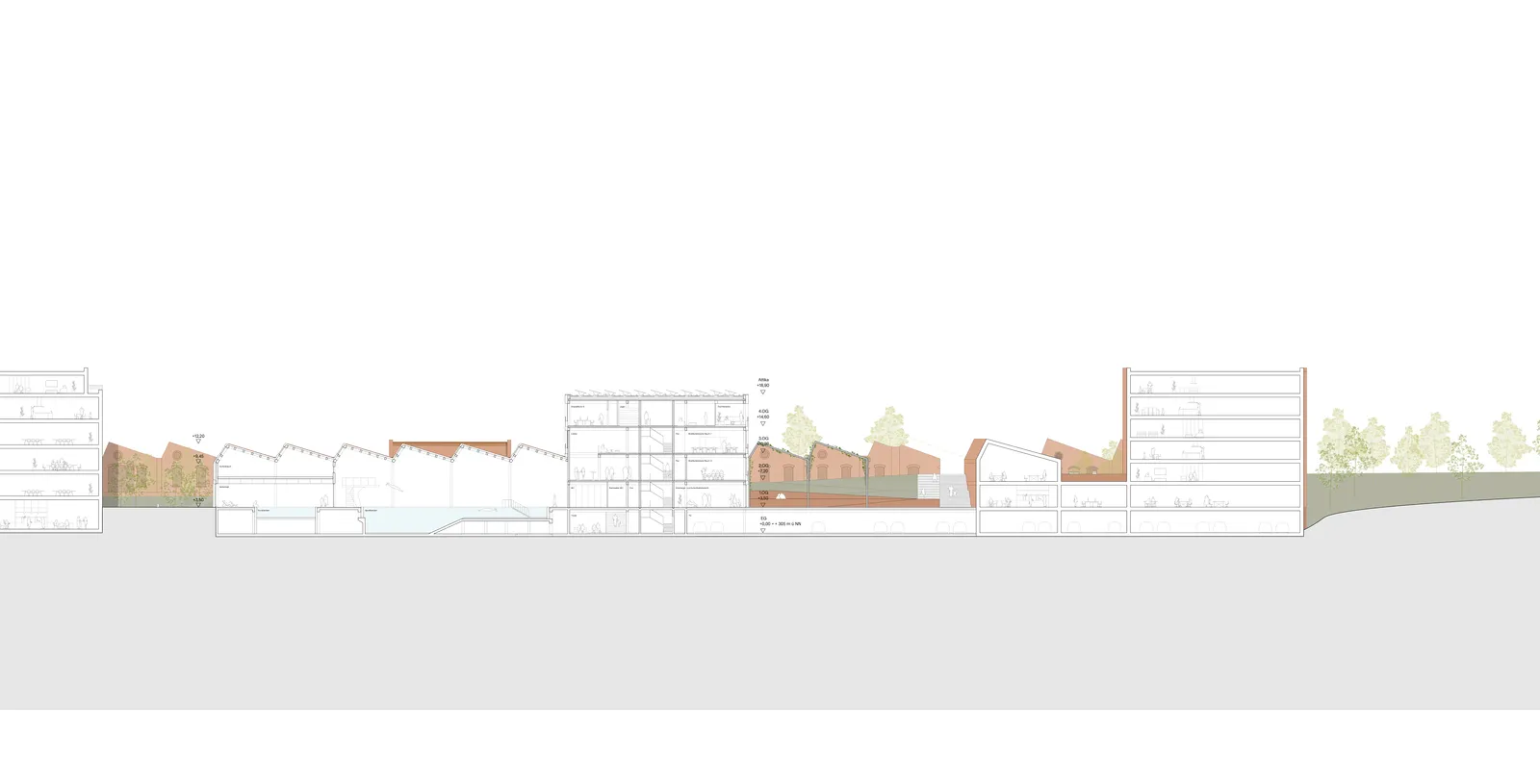
The design picks up on the materiality of the historic shed façade and, through the use of bricks, creates a harmonious overall appearance that is typical of the location. The new buildings are linked by similar materials. A continuous, generously designed plinth along the promenade and a structuring brick façade on the upper floors form connecting architectural elements that visually unite the ensemble. At the same time, the differentiated design of the façade panels allows for flexible adaptation to the respective use.
The design of the climate lake includes the integration of an embankment in the southern area. The gentle transition to the water not only creates a habitat for aquatic animals and birds in the reeds, but also integrates the planned recreation area. A retaining wall will be integrated on the northern shore, which will form an attractive element in the open space as a seating step directly at the water's edge and at the same time serve as a technical element for retention during heavy rainfall events. This allows the lake to absorb additional water at short notice and makes an important contribution to flood protection in the neighbourhood.
A species-rich border is being created along the main road, which serves as a nature-based buffer zone. Targeted unsealing, new plantings and the creation of retention areas are creating a climate-resilient open space with high ecological value. The resulting green open space not only contributes to biodiversity, but also actively improves the microclimate and air quality throughout the neighbourhood.
Realization:
Competition:
Visualization:
Flooer